Lead Management
Photography Lead Management System and Auto Follow-Up Tool for Higher Booking Conversion
A complete SEO-focused guide to photography lead management, photography WhatsApp CRM workflows, and automated follow-up sequences that help studios convert more enquiries into paying bookings.
By 7CRM Team27 min read
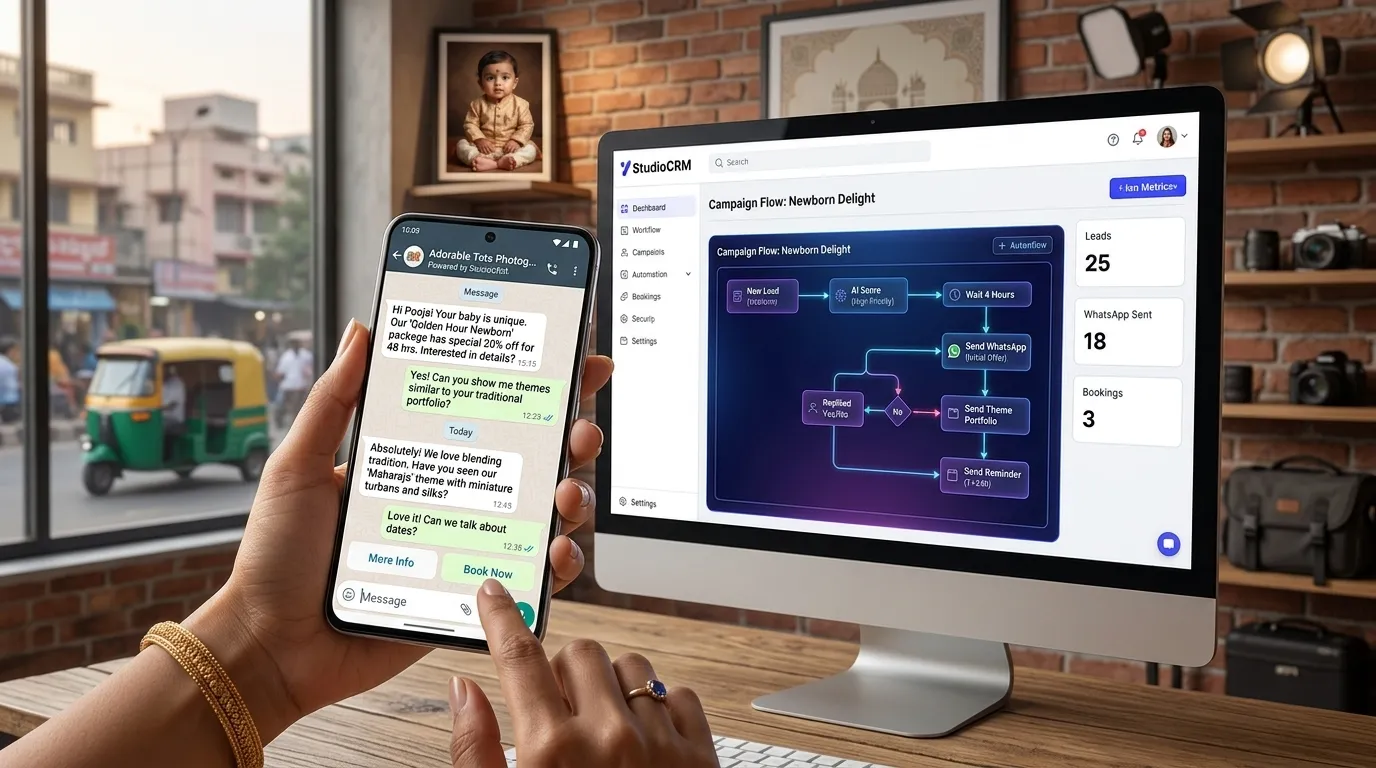
A photography lead management system is one of the most important growth assets a studio can build because enquiries are where revenue begins. Every photography business receives interest from multiple sources, yet many teams still treat lead handling as an informal process driven by whoever happens to check the phone first. That is risky. When leads arrive from Instagram, website forms, WhatsApp, Google Ads, JustDial, referrals, wedding directories, or direct calls, the business needs one photography CRM software workflow that captures everything consistently. If not, follow-up becomes selective, quotation timing becomes inconsistent, and customer trust drops before the sales conversation has even matured. A strong photography business management tool prevents this by forcing clarity at the first moment of contact. Every lead gets a source, category, timestamp, owner, and next action. That structure may sound simple, but it is often the difference between a studio that merely gets enquiries and a studio that reliably converts them.
Lead management matters even more in photography because purchase decisions are rarely immediate. A family asking about a baby photoshoot may compare themes, prices, and delivery promises across several studios. A maternity client may take time to discuss timing and comfort with family. A wedding customer may request multiple consultations before confirming. A portrait lead may disappear for two weeks and then return once dates are finalized. That means the studio cannot depend on one-time replies. It needs a repeatable photography lead follow-up tool that can nurture interest over time without making the communication feel robotic. The best systems keep track of what the client asked, what was already sent, and when the next relevant reminder should go out. This is where a photography lead management system becomes more than a contact list. It becomes the timeline that protects every sales opportunity from being forgotten.
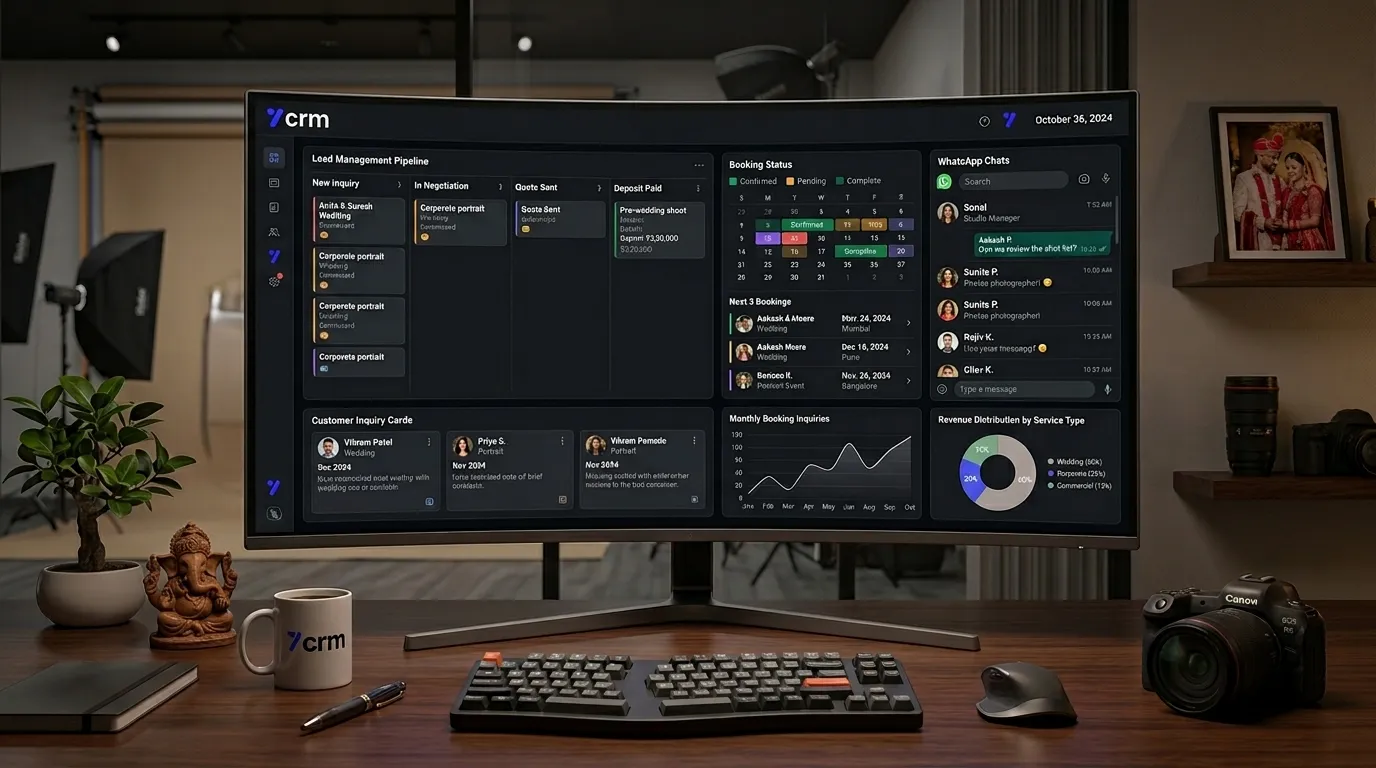
A clear lead dashboard helps photography studios see which enquiries need fast attention and which ones are moving toward booking.
Why Photography Studios Lose Leads Without a Structured Follow-Up Process
Studios lose leads for many reasons, but most of those reasons are operational rather than creative. The customer does not receive quick pricing information. Nobody follows up after the first reply. The same client is contacted by different team members with different package details. The business forgets that the client asked for a callback after salary date. A lead from a wedding portal is mixed into the same list as a family portrait enquiry, so the sales approach becomes generic and weak. These issues do not come from bad photography. They come from poor system design. A photography client management system allows the team to work with context instead of guesswork. Once every enquiry is categorized and tracked, the business can reply faster, personalize better, and maintain continuity between first contact and booking confirmation.
Another reason studios lose leads is emotional timing. Photography bookings are tied to moments that matter deeply to the client. Parents planning a newborn session, couples exploring pre-wedding photography, or families organizing a birthday shoot all want reassurance as much as price. If the business delays too long, the customer reads that delay as lack of care or lack of professionalism. A photography WhatsApp CRM solves this by making early communication faster and more consistent. It does not mean sending automated spam. It means acknowledging the enquiry, delivering the right information in the right sequence, and making it easy for the customer to continue the conversation. When the business appears attentive and organized, the client feels safer moving ahead.
- Missed follow-up windows after the first enquiry response
- No clear ownership of who should call or message next
- Untracked package sharing and quotation history
- No segmentation between baby, maternity, wedding, and portrait leads
- Inconsistent reply quality across sales staff or coordinators
- No analytics on which sources actually convert into revenue
Automated WhatsApp follow-up helps studios stay visible while customers compare packages and decide on dates.
How an Auto Follow-Up Tool Improves Booking Conversion
The biggest benefit of an automated photography lead follow-up tool is that it maintains sales momentum without requiring someone to remember every conversation manually. If a customer asks for baby photoshoot pricing today, the studio can acknowledge the enquiry immediately, share package options later the same day, send a gentle reminder in two days, and highlight limited slots or new themes later in the week. This sequence is not aggressive when it is relevant and respectful. It is service. The client already expressed interest, and the studio is helping them move forward with clear steps. A photography CRM software platform makes this possible by tying reminders to lead status instead of relying on personal memory or messy chat searches. The result is better consistency, stronger trust, and more opportunities to recover leads that would otherwise go cold.
Automated follow-up also improves the quality of human work. When routine reminders are handled by the system, the sales team can spend more time on conversations that genuinely need attention. They can answer specific concerns, recommend the right package, clarify shoot logistics, and guide serious customers toward booking. In other words, photography business automation does not remove the human element. It protects it from being buried under repetitive administrative work. The highest-performing studios usually combine automation for repetitive communication with strong personal attention for high-intent leads. That balance creates a professional customer journey that feels both responsive and personal.
A practical photography lead management system should support follow-up based on real customer behavior, not one fixed timeline for everyone. Some clients need quick callbacks because dates are urgent. Others need package comparisons because they are still evaluating value. Some need offer reminders around salary cycles or family decision-making. That means the system must allow flexible next actions, custom notes, and visible reminders for the team. The more context the system keeps, the more natural the follow-up becomes. Good sales discipline in photography is not about sending more messages. It is about sending the right next message at the right moment with the right context.
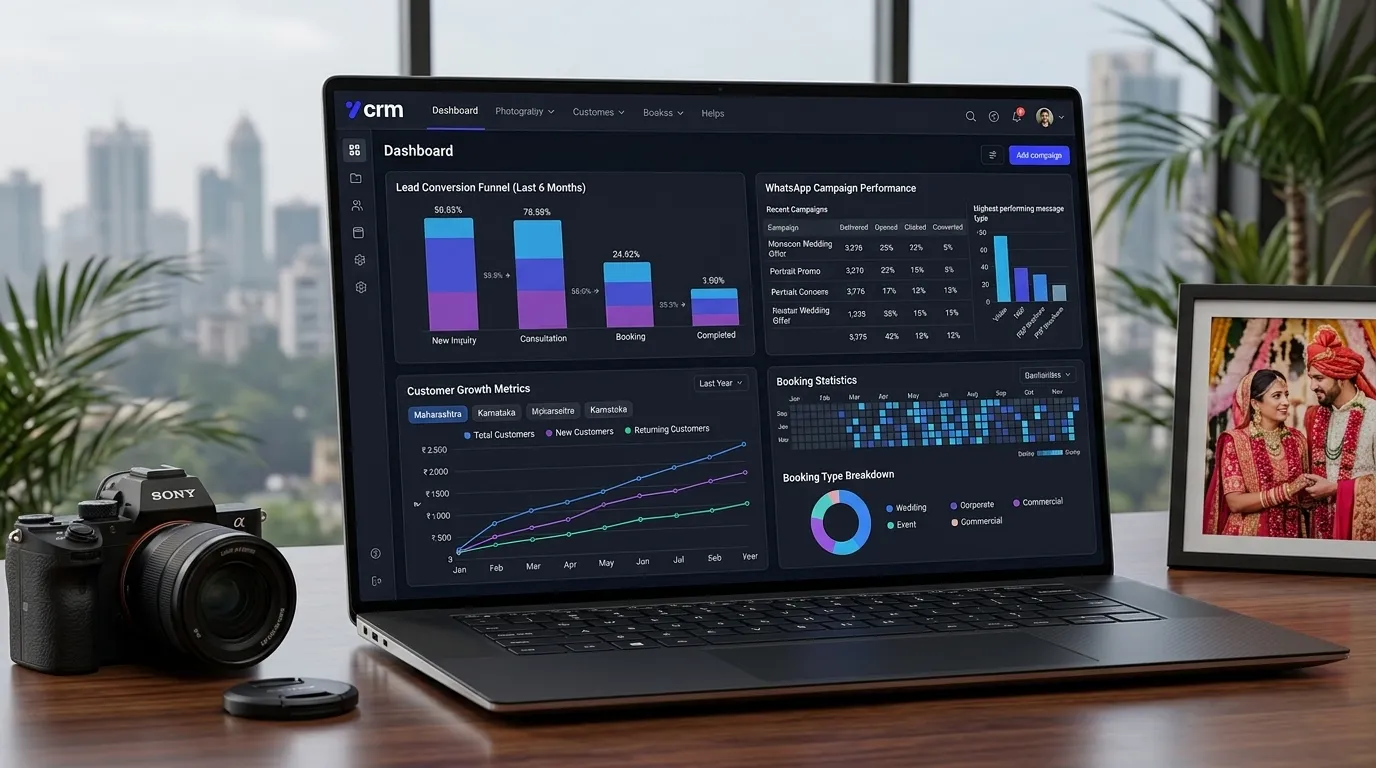
Conversion dashboards reveal which lead sources, package categories, and follow-up patterns are actually generating bookings.
Using Lead Analytics to Make a Photography CRM Software Smarter
A photography lead management system becomes much more valuable when the studio uses the data inside it. Analytics can reveal which enquiry sources bring serious customers, which package categories have the highest conversion, and how long different shoot types take to close. That information helps owners make better marketing and staffing decisions. If website leads convert better than social media direct messages, the business may invest more in landing pages and SEO. If birthday shoot leads close quickly but maternity enquiries take longer, the follow-up logic can be adjusted accordingly. A photography business management tool should not only store activity. It should help the studio learn from activity. When analytics are tied to lead stages, conversion stops being guesswork and becomes a measurable management discipline.
Lead analytics also help teams improve accountability without creating confusion. Instead of blaming poor conversion on “bad leads” in a generic way, management can look at response speed, follow-up gaps, source quality, and stage drop-off. That makes coaching more useful. A coordinator who replies quickly but does not maintain follow-up can be trained differently from someone who delays the first response. A studio owner can also see whether offers are too weak, prices are unclear, or booking calls to action are not strong enough. This is where a photography CRM software platform becomes a growth engine. It reveals the hidden reasons behind sales performance and gives the studio a path to improve them.
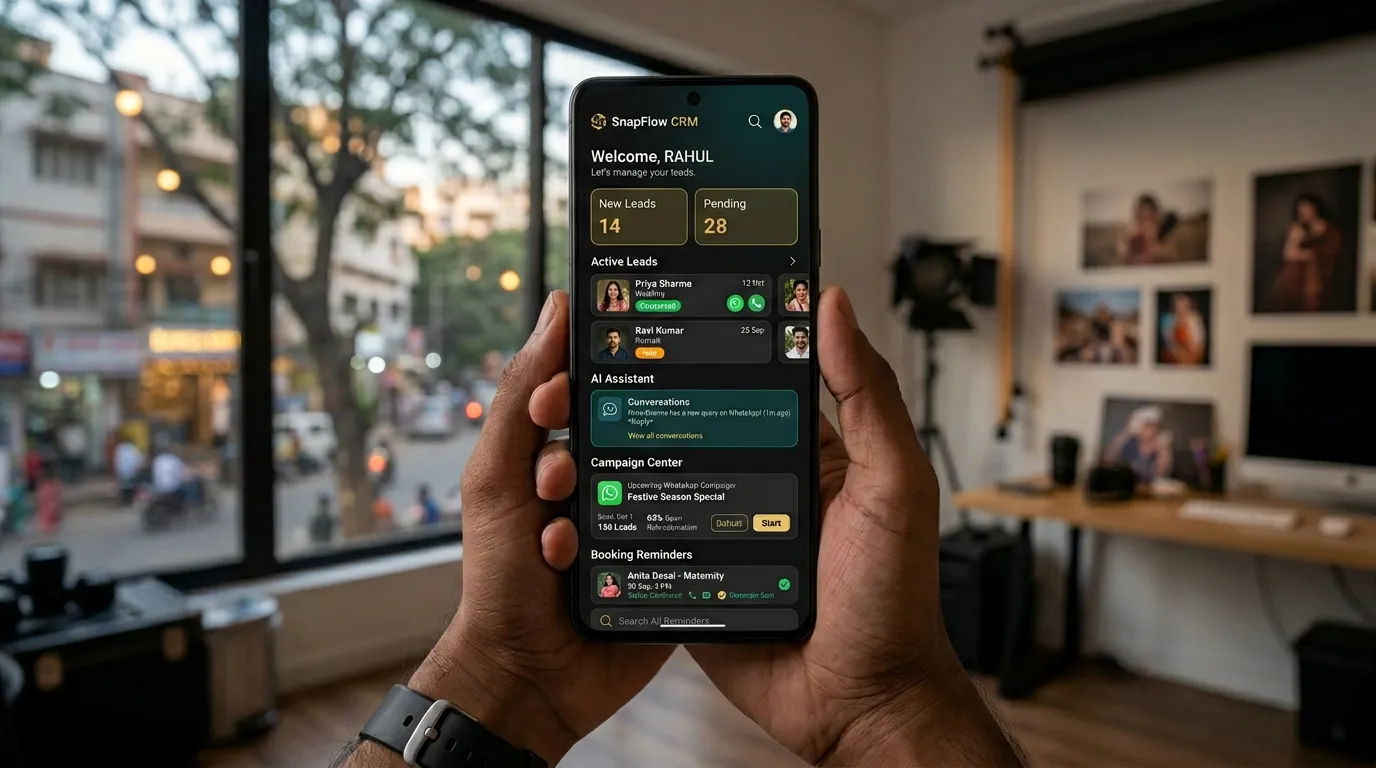
Mobile CRM access lets coordinators manage leads quickly even when they are away from the front desk.
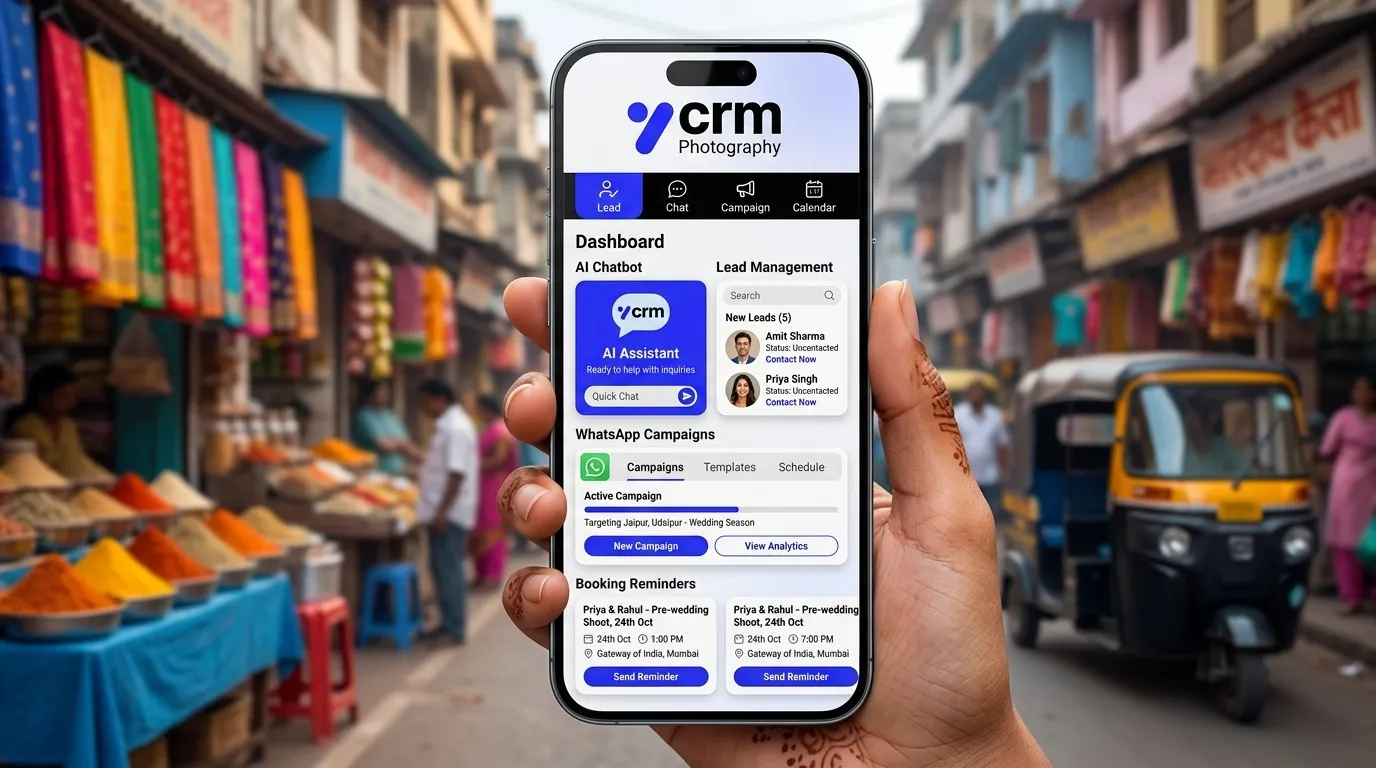
Lead owners can review customer notes, call-back timing, and package history from a mobile CRM interface.
Why Mobile Workflows Matter for a Photography Lead Follow-Up Tool
Photography businesses are rarely managed from a desk all day. Teams move between shoots, editing rooms, client meetings, and travel. That is why mobile-friendly workflow matters in any photography CRM software. If the lead management system only works well on a desktop, follow-up quality often collapses during busy periods because staff postpone actions until they return to the office. By then, the lead may have already chosen another studio. A mobile-ready photography lead follow-up tool keeps next actions accessible. The team can read notes, assign callbacks, change status, or send approved messages while on the move. That flexibility protects the customer journey from operational delay.
Mobile CRM access also supports founders and sales leads who need visibility without micromanaging every detail. They can quickly review hot leads, pending quotations, overdue follow-ups, and key booking opportunities from a phone. This improves decision speed while reducing dependency on verbal updates. For small teams especially, mobile access can create the discipline of a much larger operation because information is always within reach. The goal is not to be online all the time. The goal is to prevent important customer moments from waiting unnecessarily.
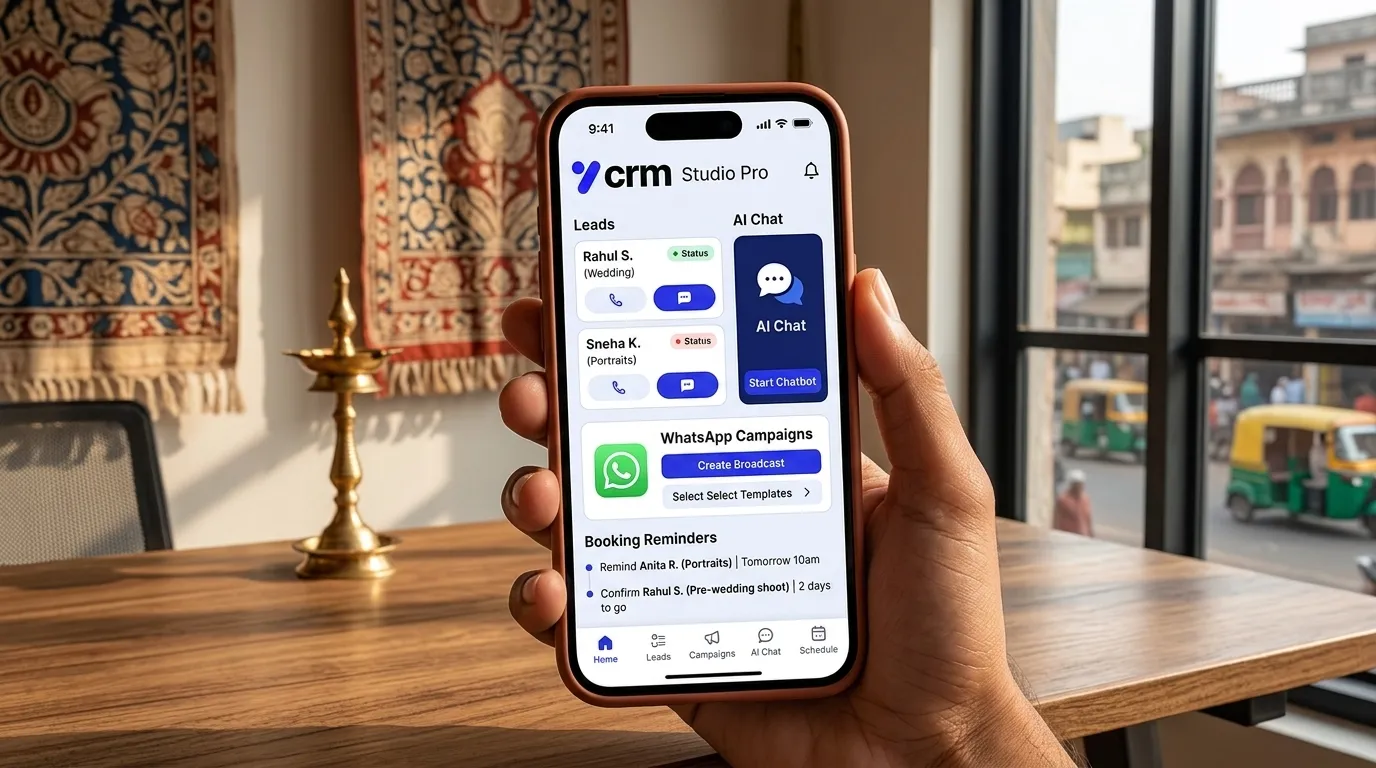
A mobile photography client management system keeps reminders, notes, and next actions visible during fast-moving studio days.
Lead Segmentation and Qualification for Better Customer Conversations
A photography lead management system should help the business understand not only who the customer is, but what kind of buying journey they are on. A customer asking for pricing only is different from one asking about date availability. A customer requesting sample themes is different from one ready to pay an advance. Proper segmentation allows the studio to treat each conversation more intelligently. Baby shoot, maternity, wedding, event, and portrait enquiries should have different qualification flows because clients ask different questions and move at different speeds. This makes the CRM for photographers more than a sales tracker. It becomes a conversation guide that helps the team respond with precision.
Qualification also helps protect sales energy. Not every lead deserves the same amount of manual attention at the same moment. High-intent leads may deserve immediate callbacks and personalized package consultation, while early-stage leads may first go through automated education and offer nurturing. A photography business management tool lets the studio allocate time where it matters most without ignoring anyone. This improves both efficiency and conversion because the team is no longer overwhelmed by one undifferentiated lead pool. Instead, it can prioritize based on readiness, value, urgency, and service category.
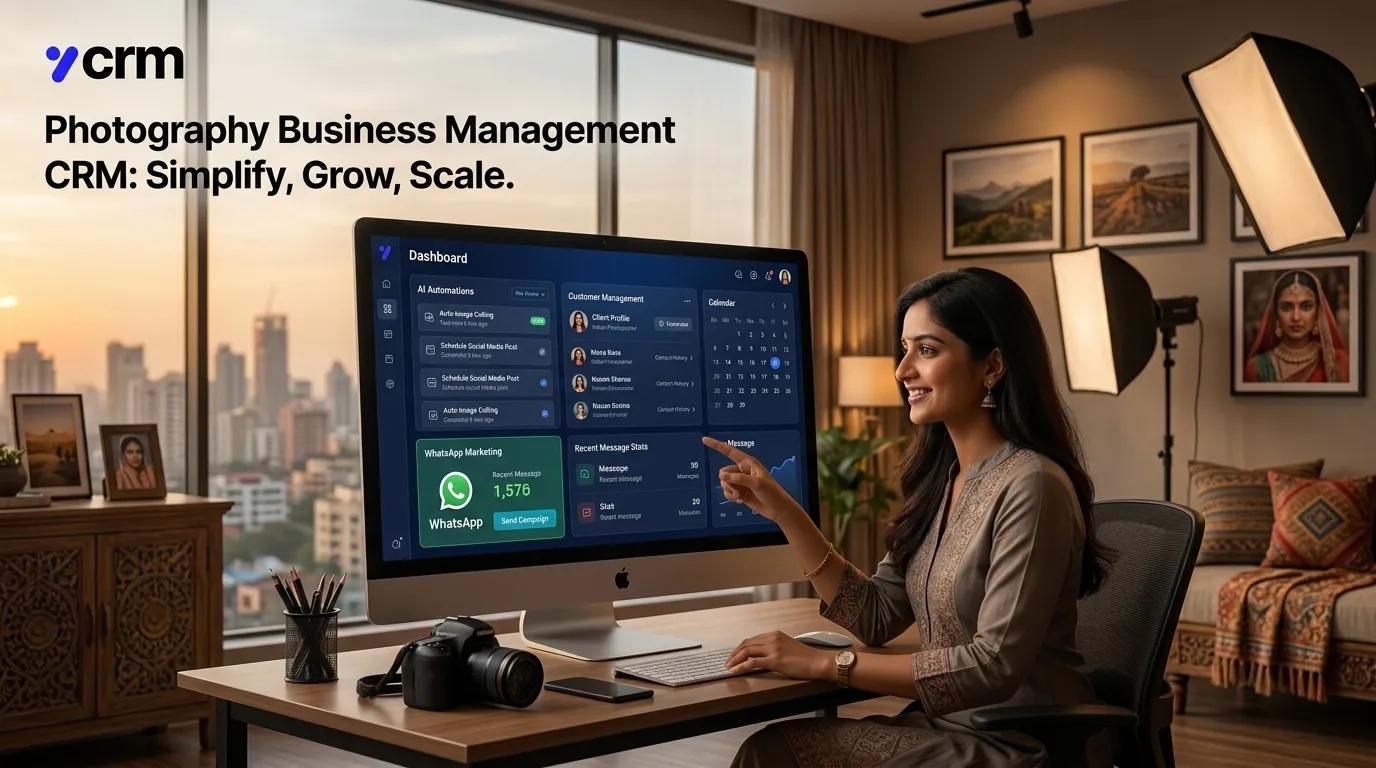
Detailed lead notes make future follow-up more personal and increase the chance of moving the customer toward booking.
How Photography WhatsApp CRM Supports Follow-Up Without Feeling Robotic
Some businesses worry that automation will make customer communication feel cold. The opposite is usually true when the system is designed well. A photography WhatsApp CRM should provide fast acknowledgement, package delivery, reminder timing, and follow-up consistency while still leaving room for personal responses when the client asks something specific. This creates a hybrid model where automation handles predictable steps and team members handle emotional nuance, objections, and closing conversations. Customers usually appreciate this because they do not have to chase the business repeatedly just to receive basic information. In photography, where trust matters deeply, structured responsiveness feels professional rather than impersonal.
The best follow-up messages are helpful, specific, and tied to real needs. They remind the client about package options, seasonal demand, limited shoot slots, or next steps for booking. They can also include proof points such as sample work, parent testimonials, convenience, or delivery clarity. A photography lead follow-up tool should allow the team to design these sequences thoughtfully instead of improvising every time. That consistency improves customer experience and makes it easier to test what actually works. Over time, the business learns which sequences convert best for each category of lead, and that learning compounds into stronger sales performance.
The purpose of a photography lead management system is not to send more messages. It is to make every next message smarter, timelier, and easier for the client to act on.
Building Follow-Up Sequences for Different Photography Niches
One of the biggest mistakes studios make is using the same follow-up script for every type of enquiry. A baby photoshoot client often needs emotional reassurance, theme examples, safety clarity, and package simplicity. A maternity client may respond strongly to styling guidance, ideal timing, and comfort-focused language. A wedding lead usually needs confidence in coverage, process, planning, and service depth. A portrait or family shoot lead may care most about ease, turnaround, and visual style. A serious photography lead management system should make it easy to store these differences and build tailored follow-up flows for each category. This matters because relevance increases response rate. The client feels understood rather than processed, and that emotional response improves conversion just as much as price or portfolio can.
Segmented follow-up also improves internal quality. When the team uses category-based workflows, they do not need to reinvent the conversation each time. They can still personalize the message, but they start from a strong structure built around common client concerns. This reduces mistakes and speeds up response time while preserving brand tone. In a photography business automation system, categories become more than labels. They become conversion logic. The more closely the workflow mirrors real client behavior, the stronger the studio’s sales process becomes.
For example, a newborn enquiry may benefit from a sequence that includes a quick thank-you message, a package summary, a gentle reminder about ideal booking timing, and a reassuring note about baby safety and comfort. A wedding enquiry may need an introduction to the consultation process, a sample portfolio route, package tiers, and a scheduling prompt for a discovery call. A photography lead follow-up tool lets the business organize these paths so no team member has to remember every detail from scratch. The client experiences a journey that feels intentionally designed for their needs, which improves trust and reduces drop-off.
Lead Scoring, Priority Rules, and Better Use of Sales Time
As enquiry volume grows, not every lead can receive the same level of manual attention at the same moment. That is where lead scoring and priority rules become useful inside a photography CRM software workflow. The goal is not to ignore lower-intent leads. The goal is to ensure high-intent leads receive fast, human attention while lower-intent leads are still nurtured intelligently through automation. A lead asking for date confirmation, package preferences, or advance payment details may deserve an immediate callback. A lead asking only for generic pricing may first move through education and reminder flow. This distinction allows the studio to protect both efficiency and conversion. Without it, staff members often burn too much time on low-readiness enquiries while serious buyers wait longer than they should.
Priority rules can be built around enquiry source, service category, event date urgency, budget fit, repeat-client status, or engagement behavior. If a returning client asks for a birthday package after previously booking a newborn session, that lead may deserve high priority because trust already exists. If a wedding lead asks about a date within the next two weeks, urgency may justify immediate escalation. A mature photography lead management system makes these signals visible, allowing the team to distribute effort with much more discipline. Over time, this creates a studio culture where follow-up is both structured and commercially smart rather than reactive.
Common Mistakes That Reduce Conversion in Photography Lead Follow-Up
Even when studios adopt CRM tools, they sometimes weaken results by using the software poorly. One common mistake is collecting lead data without updating the status consistently, which makes reports unreliable and follow-up confusing. Another is relying only on automation and failing to add human intervention when a lead becomes serious. A third is sending too much information too early, overwhelming the customer instead of guiding them. Some studios also make the mistake of treating silence as rejection. In reality, many leads simply need the right reminder at the right time. A good photography lead follow-up tool should help the team avoid these traps by combining structure with judgment.
Another mistake is failing to connect follow-up language with trust-building. Customers do not only want prices. They want confidence that the business understands their moment, respects their time, and can deliver smoothly. If follow-up messages are rushed, unclear, or generic, the studio may lose leads even when the package is competitive. Strong photography business automation should support better messaging, not replace thoughtful messaging. The highest-converting follow-up sequences usually combine clarity, convenience, social proof, and a clear next step rather than relying on repeated discount reminders alone.
- Do not leave lead status unchanged after a call, quote, or follow-up action
- Do not use the same message flow for newborn, maternity, wedding, and portrait enquiries
- Do not rely only on automation when a lead shows strong buying signals
- Do not send too many details before the customer understands the next simple step
- Do not ignore response-speed reporting when reviewing team performance
How Better Lead Follow-Up Supports SEO and Paid Marketing ROI
Lead follow-up quality directly affects marketing return on investment. Studios spend money and time generating enquiries through local SEO, blog content, service pages, social media, and paid ads. If those leads are handled badly after they arrive, the business wastes acquisition effort. A photography lead management system protects that investment by making sure every lead from every source enters a visible process. This is especially important for SEO-focused growth because search traffic often reflects high-intent research behavior. A parent searching for “best baby photoshoot studio near me” or a couple searching for wedding photography pricing may be very close to purchase. The studio that responds clearly and follows up well turns that intent into revenue. The studio that replies late loses the value of the click.
By combining source tracking with follow-up analytics, the business can also see which marketing channels deserve more investment. If blog-generated leads convert after longer nurture sequences while landing-page leads convert quickly, the studio can design different workflows for each. That is where CRM for photographers becomes more than a sales tool. It becomes a performance intelligence tool. The business can improve both lead quality and lead handling at the same time, creating a much stronger growth loop between marketing and sales.
Frequently Asked Questions About Photography Lead Management and Follow-Up
Studio owners often ask how often they should follow up without appearing pushy. The better question is whether each follow-up adds clarity or pressure. In a good photography lead management system, follow-up is tied to relevance. If the customer asked for package details, the next message should help them compare options. If they requested dates, the next message should clarify availability or booking steps. If they went quiet after receiving a quote, the next message should make it easier to respond, not simply repeat the same pricing. A photography lead follow-up tool works best when it reduces friction and uncertainty. Clients rarely mind useful reminders. They usually mind irrelevant or repetitive ones. That is why lead history and notes matter so much. They allow the team to follow up with intention rather than habit.
Another frequent question is whether every enquiry should receive manual human follow-up. The honest answer is no, not at every stage. If the business grows, manual-only communication becomes unsustainable and usually inconsistent. The better model is layered follow-up. Automation handles acknowledgement, package sharing, gentle reminders, and standard educational messages. Human staff step in for consultation, objection handling, high-intent decisions, and relationship building. This layered model is why a photography WhatsApp CRM is so effective. It allows the studio to automate the repetitive parts of response while preserving human energy for conversations that actually need persuasion, reassurance, or customization. That balance tends to outperform both extremes: pure automation and pure manual chaos.
Studios also ask whether old leads should remain inside the pipeline or be archived quickly. The answer depends on service type and buying behavior, but in photography, many leads become bookable later than expected. Parents may delay a baby photoshoot because of health or timing concerns. Couples may postpone planning conversations until families are aligned. Event clients may reappear when dates are confirmed. This means a photography client management system should preserve old lead context instead of treating silence as permanent loss. Re-engagement workflows can recover value months later, especially when the original reason for delay was timing rather than lack of interest. Good CRM practice is not just about chasing current leads. It is about protecting future opportunities too.
A related question is whether sales teams should prioritize response speed or message quality when both are hard to maintain under pressure. The best answer is that the first response should optimize for speed with enough quality to move the conversation forward, and the follow-up stages should add depth where needed. Customers usually do not expect a perfect custom answer in the first few minutes. They do expect acknowledgement, clarity, and direction. A strong photography lead management system supports this by allowing the team to send approved quick responses immediately, then continue with more specific information once the enquiry is qualified. This protects early momentum without sacrificing professionalism.
Founders frequently want to know how many lead stages a photography CRM software setup should have. Too few stages create vague reporting, while too many stages create friction and poor adoption. The best approach is to define only the stages that genuinely reflect commercial movement: new enquiry, contacted, qualified, quoted, follow-up, booked, lost, and completed are often enough for many studios. Additional sub-statuses can be introduced later if the team is ready. The goal is not to build a complicated sales taxonomy. The goal is to create meaningful visibility that people will actually maintain every day. Simplicity often drives better compliance, and better compliance drives better data.
Another important topic is message tone. Follow-up quality depends not only on timing but on voice. Photography is an emotional purchase, which means the business should sound supportive, clear, and confident rather than mechanical. A photography business management tool can store templates, but templates should still sound human. Message tone should reflect the category of service and the emotional stage of the client. A newborn parent usually needs gentle confidence. A wedding client often values assurance around process and professionalism. A family portrait lead may appreciate convenience and flexibility. The better the tone matches the moment, the stronger the conversion path becomes.
Studios also ask how to involve founders without creating a bottleneck. A useful model is to let the founder step in only for high-value or high-sensitivity moments while the photography lead follow-up tool handles visibility for everything else. The founder can review hot leads, major opportunities, or campaign-sensitive conversations through dashboards instead of receiving constant interruptions. This improves leadership efficiency because the founder contributes where trust or pricing confidence matters most, while routine follow-up continues smoothly through the team and the CRM. That is how a photography business grows without remaining trapped inside one person’s availability.
Finally, studios often ask how to know whether their follow-up system is improving. The clearest indicators are response speed, stage movement, booking conversion by source, follow-up completion rate, and recovery rate of previously silent leads. If these metrics improve over time, the photography lead management system is working. If the business has more data but no better movement, then the process needs refinement. A CRM for photographers should always be treated as a living workflow. Teams should review what customers respond to, where they stop replying, and where handoffs fail. The businesses that improve consistently are the ones that keep learning from their own pipeline instead of assuming the workflow is finished once it is installed.
It is also useful for teams to review lead management by season and campaign cycle. Photography demand often changes around festivals, school calendars, wedding seasons, holiday months, and local event peaks. A photography lead management system should help the studio understand whether response behavior and follow-up logic need to shift during these periods. For example, limited-slot urgency may work well during peak baby photoshoot or wedding months, while educational nurturing may work better in quieter periods when customers are planning ahead. This seasonal insight helps the team make smarter decisions instead of repeating the same follow-up pattern all year. When the CRM is used this way, it becomes part of commercial strategy, not only part of sales administration.
Studios can also use their photography lead follow-up tool to improve collaboration between marketing and sales. If certain ad campaigns or blog topics are generating many low-intent enquiries, the studio can adjust messaging before the leads even arrive. If some sources generate fewer enquiries but much higher booking rates, the business can double down on those channels. A photography business management tool supports this alignment by showing what happens after the click, not just before it. The result is better resource allocation, more realistic targets, and a stronger feedback loop between visibility and conversion.
Ultimately, the best lead process is the one that the team can follow consistently under pressure. Busy studio days reveal whether the system is real. If the workflow still works when phones are ringing, shoots are running late, and coordinators are handling multiple clients at once, then the CRM is serving the business properly. If the team abandons the system as soon as things get busy, the design needs simplification. That is why the best CRM for photographers is one that combines clarity with practicality. It should make disciplined follow-up easier during real-world chaos, because that is when most revenue is either saved or lost.
Studios that continue refining this process usually discover that better lead management changes more than conversion numbers. It changes confidence. The team becomes more certain about what to do next, managers become more confident in forecasting, and customers experience fewer gaps in communication. Over time, that confidence becomes visible in every part of the business, from faster replies to better handoffs to more predictable bookings. A photography lead management system is therefore not just a task board. It is a framework for reliable commercial behavior, and reliable commercial behavior is one of the strongest growth advantages a studio can build.
For founders serious about scaling, the key is to keep the workflow both measurable and human. Use the photography lead follow-up tool to enforce timing, visibility, and accountability, but keep reviewing the language, tone, and client response patterns that make the process feel supportive instead of mechanical. When the business combines disciplined structure with empathetic communication, conversion improves in a way that is sustainable. That is the real goal of a CRM for photographers: not more noise, but more meaningful movement from first enquiry to confirmed booking.
In practical terms, this means every studio should leave the design phase with a simple promise to itself: no lead without a source, no lead without an owner, no lead without a next step, and no major marketing effort without post-enquiry measurement. When those habits become routine, the photography business automation system stops being theoretical and starts becoming a daily advantage. That advantage compounds every time a customer receives a faster reply, every time an old lead is recovered, and every time a booking happens because the studio followed through better than the competition.
A studio that masters this discipline usually finds that its sales workflow becomes easier to teach, easier to monitor, and easier to improve. That is exactly what makes a photography lead management system such a valuable growth asset over time.
When owners review this process quarterly, they often find hidden gains beyond direct conversion. Better lead handling improves forecasting, staffing confidence, pricing discipline, and even morale because the team can see progress instead of feeling buried in loose conversations. A photography CRM software workflow that captures source, stage, follow-up, and result creates a clearer picture of commercial reality. That clarity makes better management possible, and better management is often what turns inconsistent enquiry volume into a stable booking pipeline.
As a result, studios that keep refining follow-up usually become better not only at closing new leads, but at understanding demand more broadly. They learn which categories need education, which ones need urgency, and which ones need trust-building. That level of commercial insight is hard to gain without a structured photography lead management system because the evidence stays buried in scattered conversations instead of becoming visible patterns the team can act on.
That visibility is one of the most underrated advantages of a strong follow-up process. Once the team can clearly see why leads move, stall, or convert, it becomes easier to improve the entire photography sales journey with confidence instead of guesswork.
That kind of operational clarity is exactly why a serious photography lead management system becomes more valuable every month the studio uses it consistently.
Final Takeaway on Photography Lead Management and Auto Follow-Up
Studios that want more bookings should treat lead handling as a professional discipline rather than a casual inbox task. A strong photography lead management system captures every enquiry, qualifies it properly, assigns ownership, tracks movement, and supports thoughtful follow-up until the customer books or clearly exits the journey. When combined with a photography WhatsApp CRM, mobile visibility, analytics, and automation, the business becomes faster and more dependable. That is important because clients often judge professionalism before they judge photography quality. They notice speed, clarity, and confidence from the first interaction onward.
For baby photoshoot studios, maternity brands, wedding teams, portrait businesses, and freelance photographers, the path to better conversion is clear. Build a CRM for photographers that makes lead status visible, follow-up automatic, notes searchable, and next steps obvious. Use analytics to improve, use segmentation to personalize, and use mobile workflows to keep the process alive during busy days. The result is not just more efficiency. It is a more trusted, more consistent photography brand that turns interest into bookings with far less friction.