Automation
Photography WhatsApp CRM, AI Chatbot, Campaign Automation, and Cloud Storage Guide
An in-depth guide to photography WhatsApp CRM, photography AI chatbot workflows, campaign automation, client segmentation, and cloud storage for growing studios.
By 7CRM Team29 min read
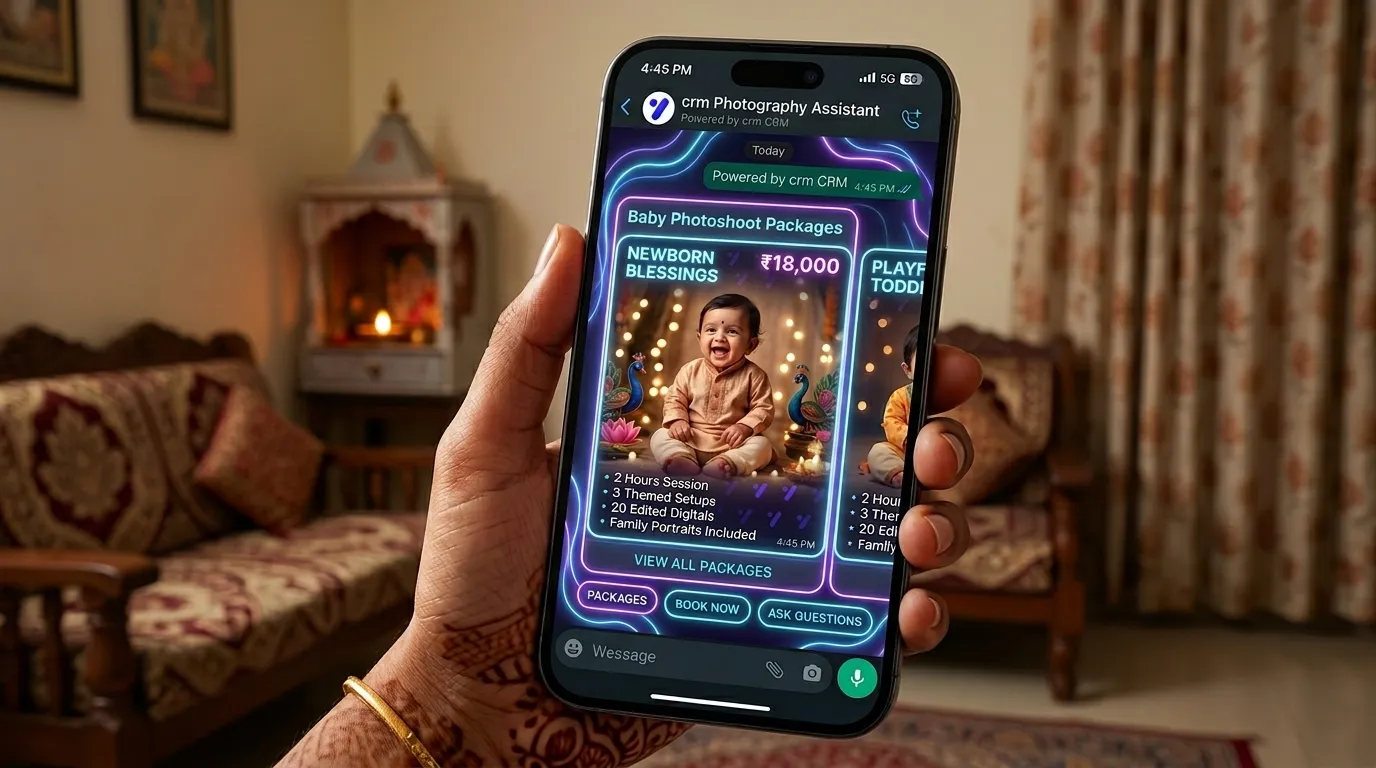
Photography businesses increasingly win or lose customer trust through communication speed and clarity. A family interested in a baby photoshoot may ask for pricing at midnight. A maternity client may want theme options while commuting. A wedding customer may request a callback after office hours. If the studio cannot respond quickly or if the team keeps losing conversation context, the customer experience weakens before the shoot is ever booked. That is why photography WhatsApp CRM workflows, AI chatbot support, campaign automation, and organized storage now matter so much. They help the studio create a reliable communication engine that feels responsive, informed, and professional. Instead of jumping between personal chats, spreadsheets, gallery links, and folder searches, the team works within one photography business management tool designed to protect continuity from enquiry to delivery.
A modern photography studio CRM is no longer only about lead status. It is also about customer communication infrastructure. The business needs a system that can greet enquiries quickly, answer repetitive questions, share offers, remember what was already promised, run campaigns to the right customer groups, and connect all of that to storage and delivery history. This is especially valuable for baby photography studios, maternity photographers, portrait brands, event teams, wedding studios, and freelancers who want to look organized without building a large support team. When clients see fast replies and clean follow-through, they assume the shoot experience will be equally well managed. In that sense, a photography WhatsApp CRM does more than send messages. It shapes the client’s confidence in the brand.
An AI chatbot inside a photography CRM helps studios stay responsive outside office hours without sacrificing message quality.
Why Photography WhatsApp CRM Is So Important for Studio Growth
WhatsApp is often the most natural communication channel for photography clients because it feels personal, fast, and familiar. Customers use it to ask for prices, shortlist options, confirm dates, request offers, send references, and clarify payments. But while the channel is convenient for clients, it becomes messy for studios when the business depends on personal phones, isolated staff conversations, and manual message history. A photography WhatsApp CRM solves that problem by centralizing the conversation flow. Enquiries can be captured, tagged, assigned, and tracked. Important replies do not disappear when one team member is unavailable. Offers and pricing templates become easier to manage. Follow-up reminders become visible. This turns WhatsApp from a fragile chat tool into a structured sales and support channel that belongs to the business rather than to one individual device.
Studios that rely heavily on referrals, social media, and local marketing benefit even more from a photography WhatsApp CRM because many of those prospects prefer immediate, mobile-first interaction. If the studio can respond fast with the right package details and a clear path to booking, it keeps momentum on its side. If the reply is delayed, generic, or inconsistent, the lead often cools down quickly. That is why WhatsApp workflow should be treated as part of the studio’s core revenue system. Strong communication is not an admin detail. It is a conversion advantage.
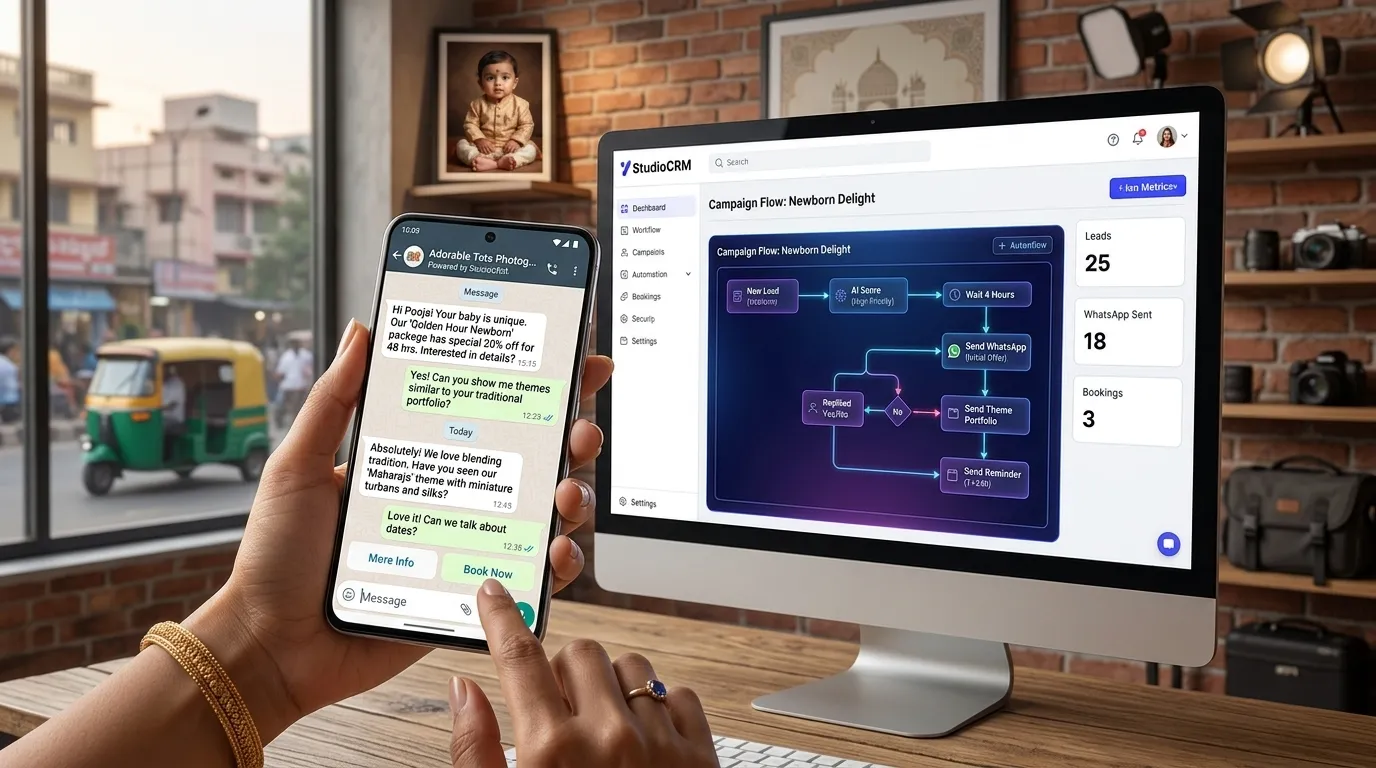
A photography WhatsApp CRM can nurture leads with timely pricing, package, and reminder messages while keeping the process organized.
How a Photography AI Chatbot Supports Sales and Client Service
A photography AI chatbot becomes useful when it handles the high-volume, repetitive questions that consume staff attention every day. Clients ask about pricing, package inclusions, album options, availability, delivery time, theme ideas, and booking steps again and again. These questions matter, but they do not always require a human to type the first answer manually. An AI chatbot attached to photography CRM software can respond instantly with approved information, collect basic lead details, and move the conversation to the right next step. This helps the business maintain responsiveness even during busy shoots, weekends, or after-hours enquiry spikes. Instead of leaving customers waiting until morning, the studio can keep the interaction warm and informative immediately.
The best photography AI chatbot does not try to replace photographers or sales staff. It prepares the ground for them. It answers the first layer of questions, qualifies simple interest, shares relevant information, and creates continuity in the client timeline. Once the customer moves into a serious booking conversation, a team member can step in with context already available. This makes the handoff smoother and improves the overall experience because the client does not need to repeat the same questions. In practical terms, the AI chatbot becomes part of the photography client management system, making communication more scalable without making it less personal.
- Instant answers to pricing, package, and availability questions
- Automated sharing of offers, themes, and booking process details
- Lead qualification before manual sales conversations begin
- Consistent customer support for order updates and common requests
- Reduced response burden on coordinators during high-enquiry periods
- Better continuity between enquiry, booking, and post-shoot communication
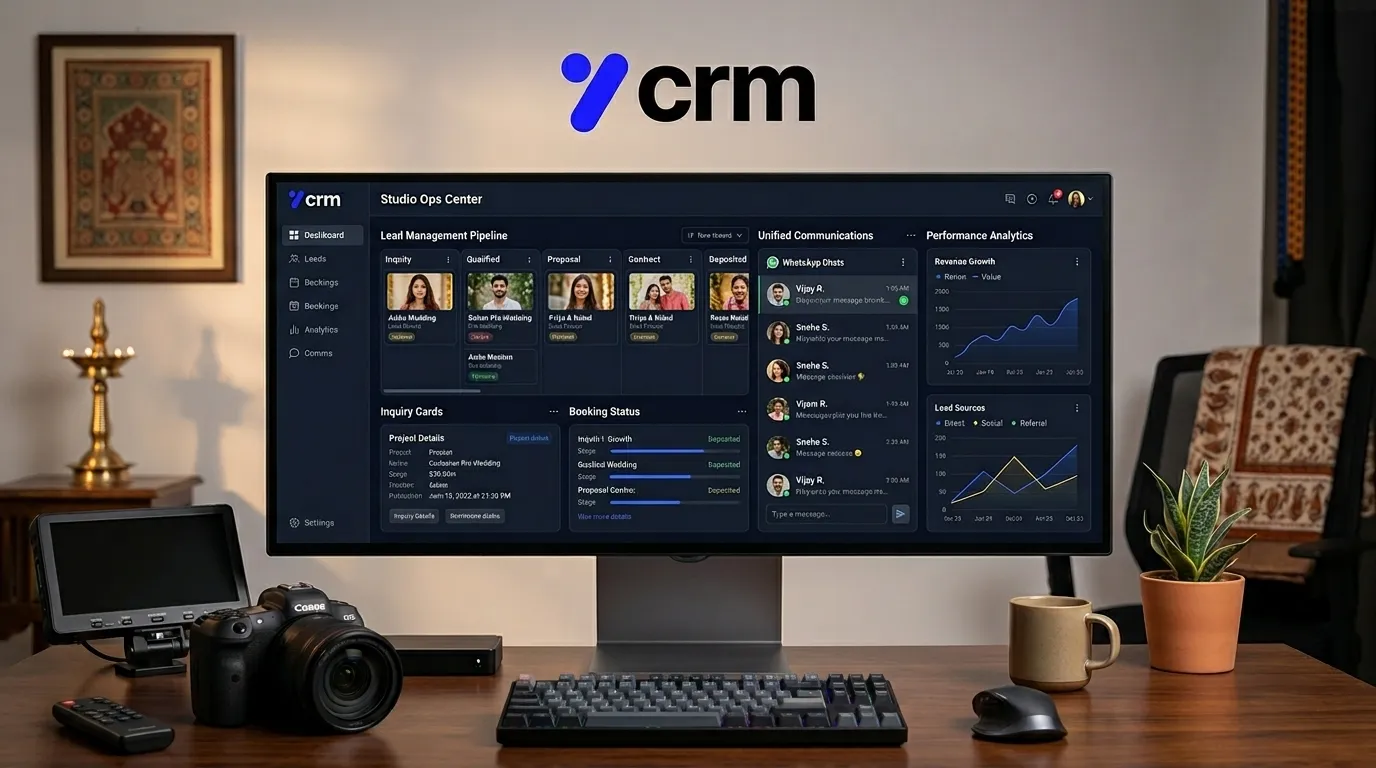
Conversation history and customer segmentation become more powerful when communication lives inside the studio CRM.
Photography WhatsApp Campaign Software and Smart Customer Segmentation
Campaigns are where many studios underperform because they send broad promotional messages to mixed audiences with very different needs. A photography marketing CRM allows the business to segment customers by shoot type, lifecycle stage, package value, recency, or purchase history before sending any campaign. That means the message becomes more relevant. A family that completed a newborn shoot months ago may be interested in a first birthday package. A wedding client may respond to anniversary or maternity promotions. A premium portrait client may value exclusive seasonal themes more than discounts. Good segmentation makes photography WhatsApp campaign software more effective because the campaign feels timely and personal rather than generic and noisy.
Campaign automation also helps studios maintain visibility without depending on one-off bursts of manual effort. Seasonal offers, festival promotions, last-minute slot fills, referral programs, payment reminders, and review requests can all be planned within the CRM. This creates a steadier marketing rhythm. More importantly, it connects marketing activity with customer data, making it possible to measure results. When the studio sees which segments respond, which messages convert, and which campaigns create repeat business, the photography marketing CRM becomes a serious revenue tool rather than just a message sender.
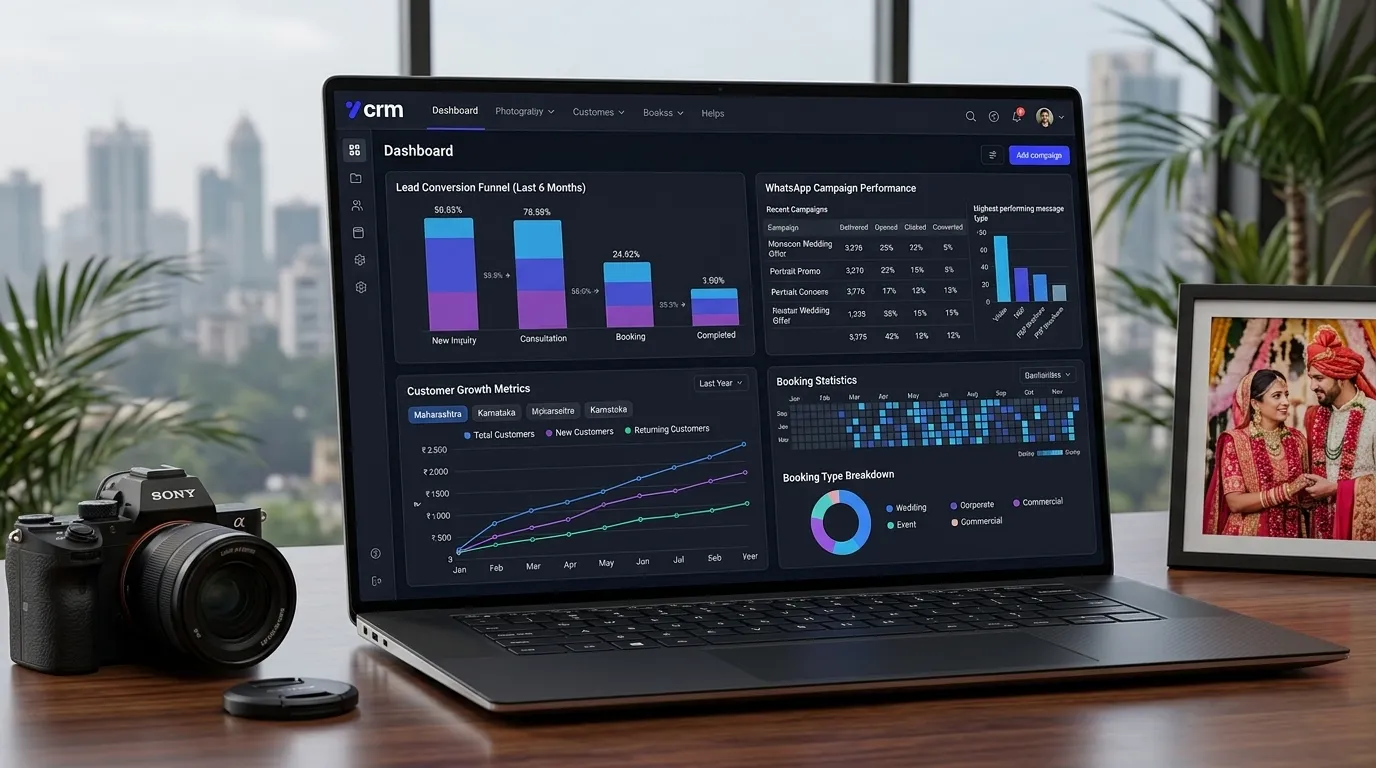
Campaign reporting helps studios see which customer segments and offers are creating meaningful engagement and bookings.
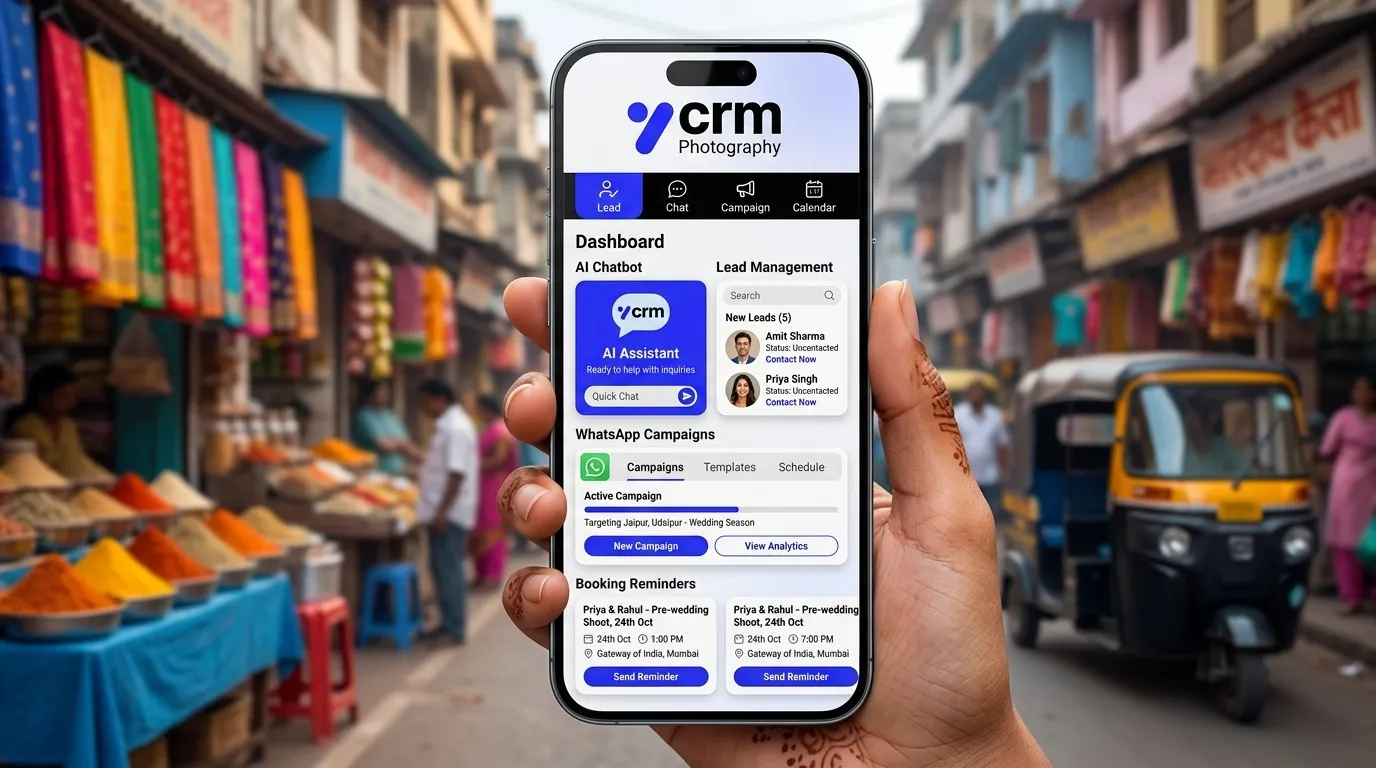
Campaign tools are more practical when teams can review lists, segments, and responses from mobile devices too.
Cloud Storage and Organized Client History Inside a Photography Studio CRM
Communication quality improves when the team can quickly access the supporting materials behind the conversation. Photography businesses manage a large amount of related data: quotation PDFs, mood boards, reference images, contracts, invoices, payment proofs, delivery lists, edited galleries, raw folders, and customer approvals. If these assets are scattered across random folders or individual devices, the customer journey slows down. Staff members spend time searching instead of helping. A photography studio CRM connected to cloud storage solves that by keeping customer communication and customer assets close together. When the coordinator can open the client record and immediately find the relevant documents or file notes, service feels more confident and more precise.
Free or integrated cloud storage also supports repeat business. Studios often need to revisit old package history, image delivery status, family preferences, or contract details months later. If the information is easy to find, reorders and follow-up services become smoother. This is especially useful in family photography and baby milestone businesses where customers return over time. A photography client management system with storage is not only an efficiency feature. It is a retention feature because it makes long-term customer relationships easier to support well.
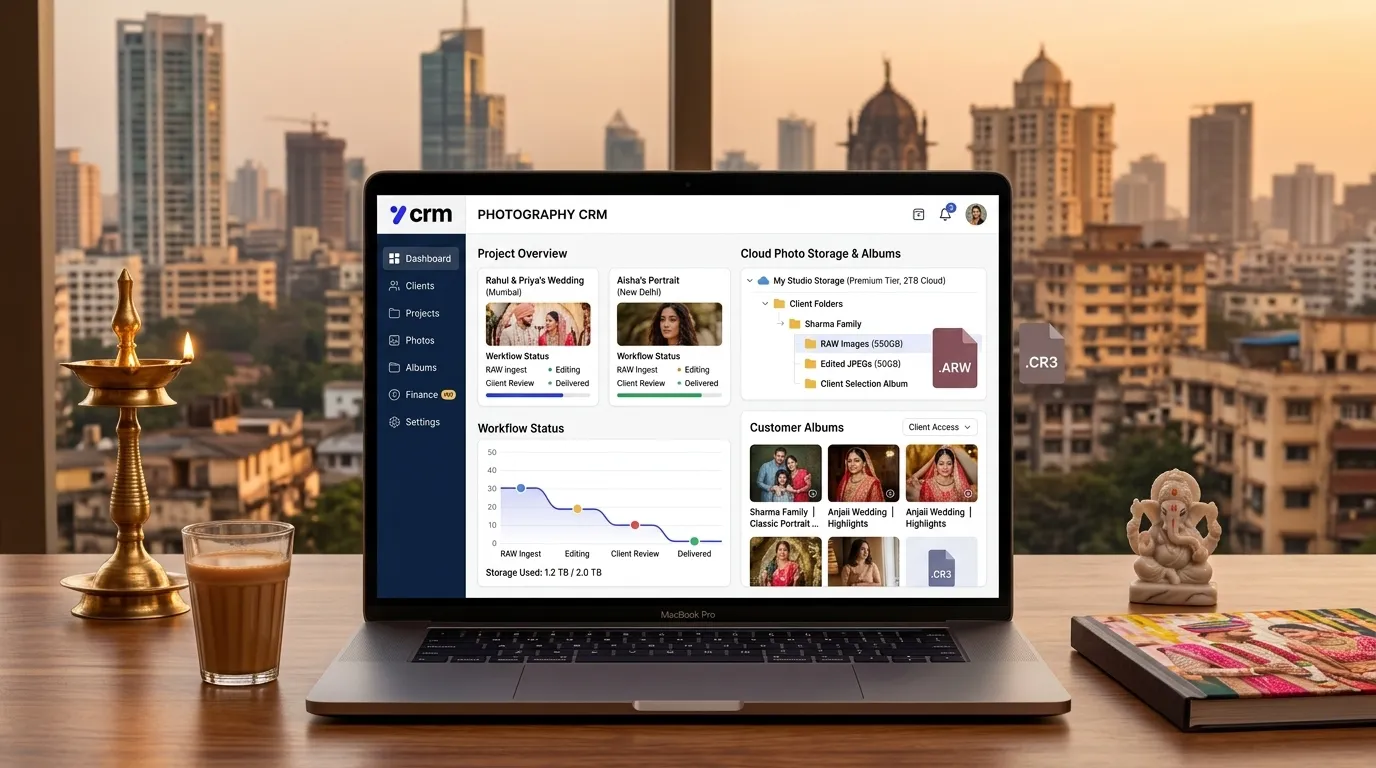
Connected storage keeps contracts, albums, proofs, payment records, and communication easier to retrieve at every stage of the client journey.
Mobile Communication Workflows and Always-Available Visibility
Photography teams are mobile by nature, so a communication-heavy photography business management tool has to work well beyond the office desktop. Mobile CRM visibility allows coordinators, founders, or sales leads to check campaign performance, read client notes, send approved updates, and review follow-up tasks while traveling or working on location. This is not just a convenience issue. It changes responsiveness. Many customer decisions happen while they are also on the move, so the studio that can answer without delay often has an advantage. A mobile-capable photography WhatsApp CRM helps protect that advantage without forcing the team into disorganized personal chat habits.
Mobile visibility also improves management quality because important communication signals remain visible throughout the day. The team can spot unanswered enquiries, pending approvals, or high-value campaign replies before they cool down. For smaller studios especially, this can create enterprise-like process discipline without enterprise complexity. The goal is simple: no important conversation should disappear just because the studio is busy shooting or traveling.
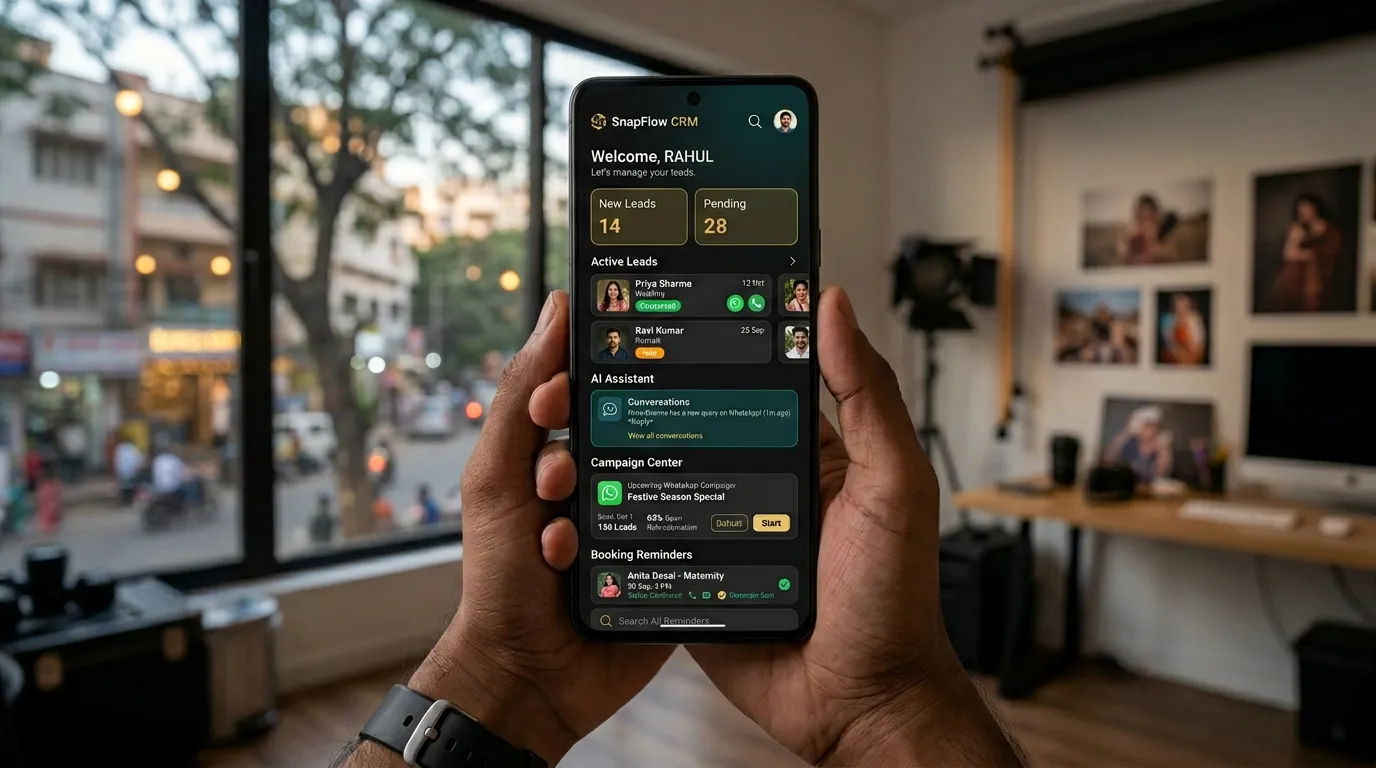
A mobile-first CRM view helps teams protect fast response time even during outdoor shoots or event days.
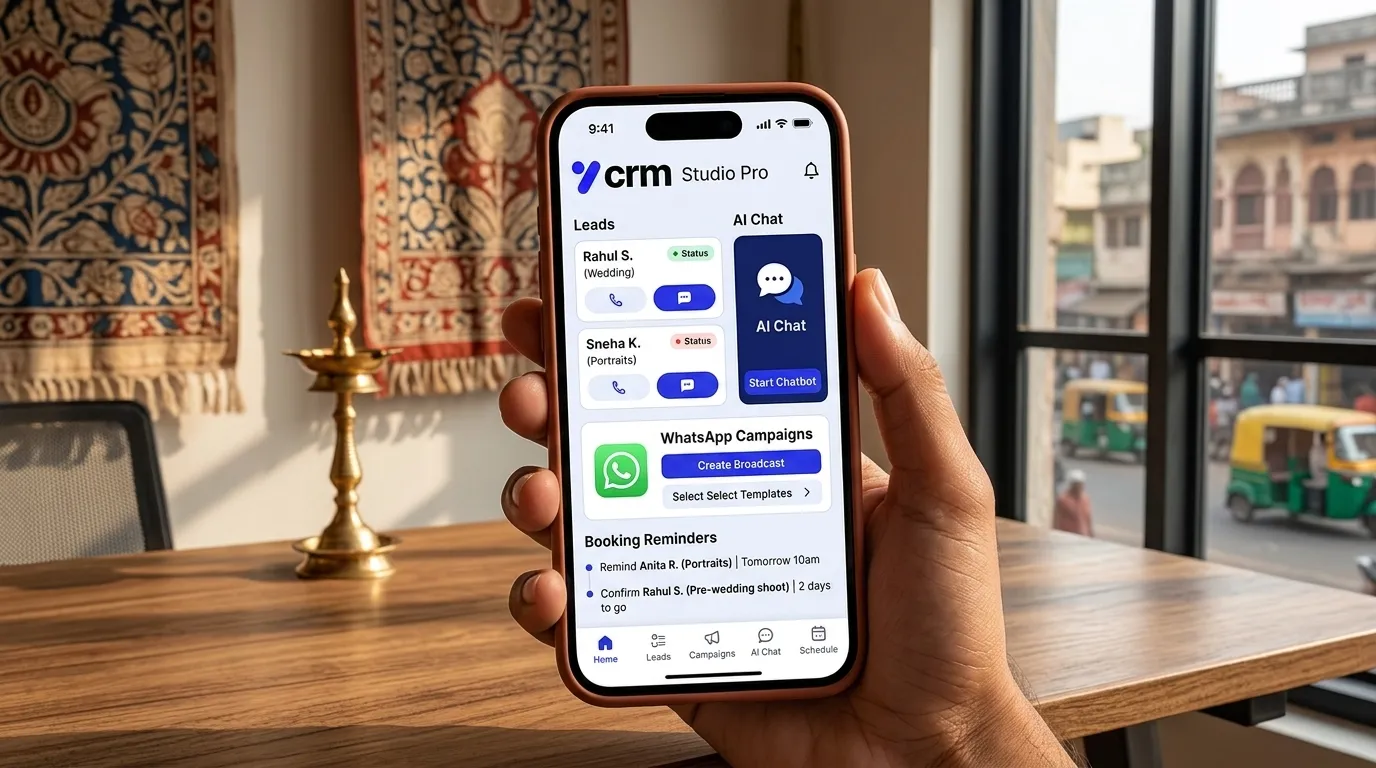
Mobile reminders and customer notes keep the next action visible when the studio day gets busy.
How These Features Work Together as One Photography Business Automation System
The true advantage appears when these tools are not treated as separate modules. A photography WhatsApp CRM captures and continues the conversation. A photography AI chatbot handles common requests and instant responses. A photography marketing CRM sends targeted campaigns based on customer history. Cloud storage keeps the supporting assets organized. Analytics reveal which offers and segments perform best. Together, these functions create a complete photography business automation system. The studio no longer reacts to one customer message at a time in isolation. It manages a connected customer journey. That connected journey is what allows a creative business to scale without becoming chaotic.
This matters especially for studios that want to grow their reputation while handling more volume. As enquiries increase, weak systems usually cause inconsistent service and lost revenue. Strong systems let the business become more responsive, not less. Customers feel informed. Staff members feel less overwhelmed. Managers gain visibility. Campaigns become smarter. Repeat business becomes easier. A well-built CRM for photographers makes all of these improvements feel natural because communication, support, and organization are built into one workflow rather than patched together from separate tools.
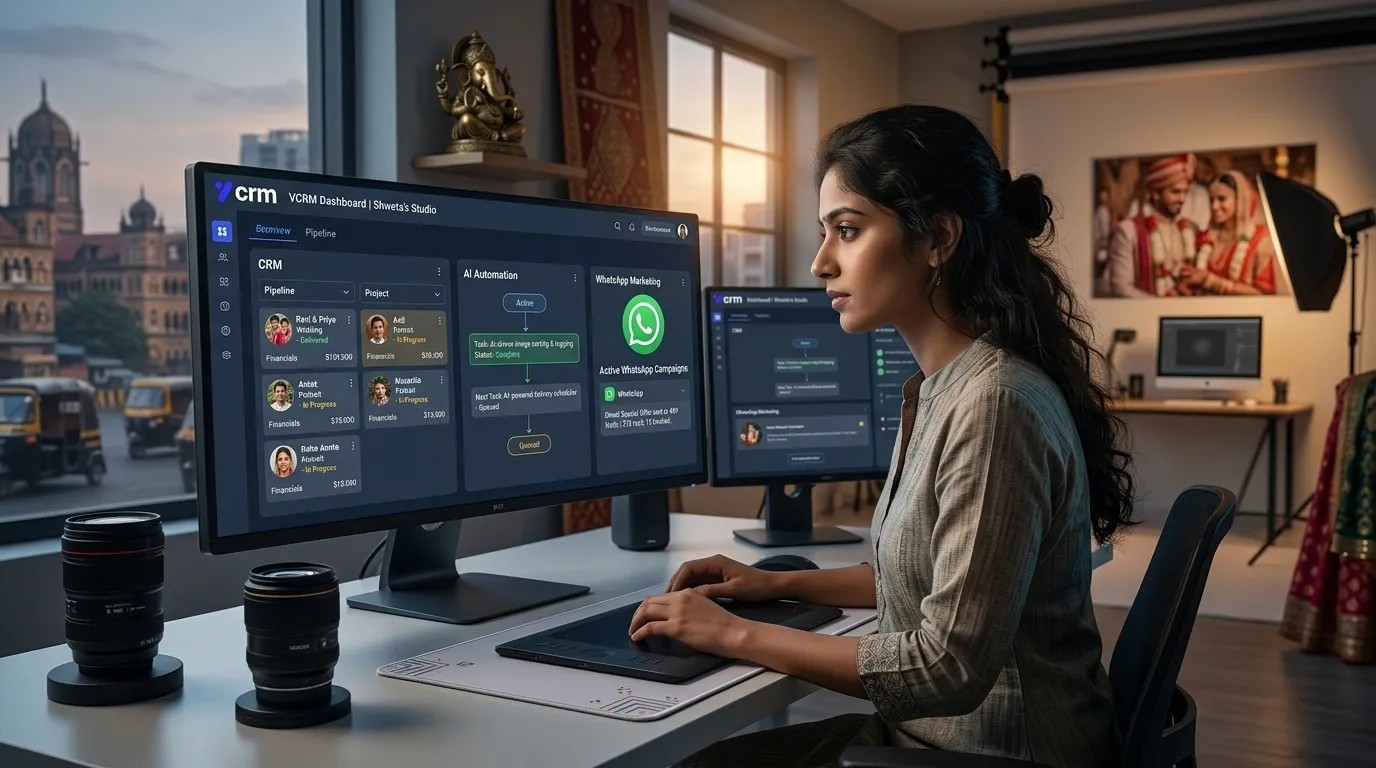
When communication, follow-up, and files are organized in one place, the studio can spend more energy on creative quality and customer care.
Photography studios grow faster when communication is instant, campaigns are targeted, and client history is always easy to find.
Practical Campaign Ideas for Photography WhatsApp CRM Workflows
Studios often ask what kinds of campaigns work best once photography WhatsApp campaign software is in place. The answer depends on customer lifecycle, but the strongest campaigns usually connect to real moments instead of generic discounts. Baby photography businesses can run milestone reminders for three-month, six-month, and first birthday sessions. Maternity studios can promote seasonal setups, styling consultations, or limited weekend slots. Wedding teams can run anniversary portrait offers, album upgrade reminders, or couple referral incentives. Family portrait brands can reconnect around festive sessions, school reopening portraits, or annual family updates. The reason these campaigns perform well is that they are grounded in customer context. A photography marketing CRM helps the studio remember that context and turn it into timely, relevant outreach that feels helpful rather than random.
Campaign planning also becomes more strategic when the business groups customers by value and behavior, not just by shoot type. High-value customers may respond well to exclusivity, early access, or premium convenience messaging. Price-sensitive customers may respond better to bundled offers or limited-period reminders. Recently active clients may need only a light nudge, while dormant clients may need stronger proof points or renewed value framing. A photography business management tool that tracks engagement gives the studio more ways to match the campaign tone to the audience. Better matching improves response quality, protects brand credibility, and reduces the temptation to overuse blanket promotions that train customers to wait for discounts.
The studio should also think of campaigns as part of relationship maintenance, not just sales pushes. Review requests, delivery follow-up, referral thank-you messages, anniversary greetings, and after-service check-ins all contribute to long-term loyalty. A strong photography WhatsApp CRM can automate much of this relationship rhythm while still leaving space for personal intervention when required. Over time, the customer experiences the studio as attentive and well organized, which is exactly the emotional signal that drives repeat business and referrals in photography markets.
How to Keep AI Chatbot Responses Helpful, Safe, and On Brand
AI chatbot quality matters because speed without trust can still damage conversion. A photography AI chatbot should never sound vague, make promises the studio cannot keep, or deliver pricing that conflicts with current packages. That is why the best implementation uses approved message boundaries. The chatbot should know what it is allowed to answer confidently, what information should be pulled from active offers, and when a human should take over. Questions about exact shoot customization, exceptional negotiation, sensitive complaints, or special delivery issues may need escalation. Questions about standard pricing, package inclusions, session duration, working hours, or current offers can often be handled automatically. This boundary-setting protects both accuracy and brand tone.
Studios should also review chatbot conversations regularly to understand where customers become confused or where the AI is too generic. Those reviews create valuable insight. They reveal missing FAQs, weak package explanations, unclear booking steps, and phrases that do not match how customers naturally speak. In that way, the photography AI chatbot becomes a learning surface for the business. It does not just answer customers; it shows the studio how customers think, what they fear, and where human intervention adds the most value. This feedback loop is especially useful for photography CRM software because it improves both automation quality and manual communication quality over time.
Storage Governance, Delivery Clarity, and Better Client Confidence
Storage inside a photography studio CRM should not be treated as a dumping ground. It works best when the business sets simple governance rules. Client folders should follow a consistent naming structure. Contracts, invoices, payment records, raw files, edited exports, and delivery proofs should have predictable locations. Notes about approvals, pending selections, or revision promises should stay connected to the customer timeline. When these standards exist, the team can retrieve information quickly under pressure. When they do not, even a strong photography client management system can become cluttered. Good storage discipline is not glamorous, but it directly affects how reliable the studio feels when customers ask for updates or support months later.
This is especially important for repeat business and support quality. Imagine a parent calling back after eight months for a milestone package while also asking whether the studio still has references from the previous shoot. Or a wedding customer asking for album upgrade options long after final delivery. If the business can retrieve the right files and customer history quickly, that interaction feels premium and trustworthy. If the team has to search in confusion, trust weakens fast. Organized storage therefore supports revenue as much as convenience. It strengthens repeat purchase potential, referral confidence, and post-delivery service quality.
- Use consistent customer folder naming inside the photography studio CRM
- Attach payment proofs, contracts, and delivery notes to the same client record
- Review AI chatbot responses regularly to improve tone and accuracy
- Segment WhatsApp campaigns by timing, category, value, and customer lifecycle
- Measure both campaign response and repeat-booking contribution when evaluating performance
How Photography Business Automation Reduces Dependency on Founder Memory
One of the hidden advantages of combining photography WhatsApp CRM, AI support, campaigns, and storage is that it reduces dependency on founder memory. Many growing studios still revolve around one owner who remembers everything: which customer asked for a callback, which family prefers minimal editing, which wedding couple requested a special album format, which lead came from a referral partner, and which past client is ideal for a birthday campaign. That works only while scale is limited. Once enquiry and delivery volume rises, memory stops being reliable enough. Photography business automation solves this by turning memory into shared operational records. The business becomes more durable because the next action does not depend on one person being available.
This shift is what allows a studio to move from founder-led hustle into repeatable growth. Team members can deliver a better experience because they inherit context from the system. Campaigns become more timely because the system knows who should receive them. Customer support becomes smoother because files and notes are easy to find. Management becomes calmer because visibility improves. In a competitive market, that organizational strength is a strategic advantage. Clients may first discover the studio because of portfolio or referrals, but they often decide based on experience, responsiveness, and confidence. A connected photography CRM software platform helps the studio deliver those qualities consistently.
Frequently Asked Questions About Photography WhatsApp CRM and AI Chatbot Systems
A frequent question from studio owners is whether customers really want to chat with AI. In most cases, customers do not care whether the first helpful reply comes from a human or an AI-assisted system as long as the answer is accurate, timely, and easy to act on. What frustrates them is waiting, repeating information, or receiving unclear instructions. A photography AI chatbot succeeds when it removes those frustrations. It should provide the first layer of clarity quickly, then route more specific needs to a human with context preserved. In that sense, the value of the chatbot is not novelty. It is continuity. The customer feels heard immediately, and the team inherits a cleaner conversation when it is time to step in personally.
Another common concern is whether WhatsApp campaign automation can damage brand perception. It can, if it is used carelessly. But when the studio relies on segmentation, timing, and relevance, campaigns usually strengthen the brand instead of weakening it. Clients appreciate reminders that make sense for their lifecycle, such as baby milestones, annual family sessions, album upgrades, or special event offers. What they dislike are repetitive mass messages that ignore context. A photography marketing CRM is powerful precisely because it helps the business avoid that mistake. It gives the studio the ability to communicate with intention instead of volume alone.
Studios also ask how often they should message existing customers through a photography WhatsApp CRM. The right frequency depends on category and relationship depth, but the principle is simple: every message should either help, remind, or reward. Helpful messages include planning guidance, booking updates, delivery clarity, or preparation tips. Reminder messages include payment due dates, selection deadlines, and timely seasonal prompts. Reward-style messages include loyalty offers, priority access, or relevant repeat-session suggestions. If communication does not serve one of those functions, it is usually better left unsent. This principle keeps the customer experience respectful while still allowing the business to stay visible and commercially active.
Another important question is whether cloud storage inside a photography studio CRM should hold only administrative documents or also visual delivery assets. The answer depends on workflow volume, but many studios benefit from linking both because customer support improves when communication and files are connected. A coordinator answering a delivery query should not have to jump across unrelated systems to understand what was promised and what was already sent. Even if large raw archives live elsewhere, the CRM should still point clearly to the relevant assets, approvals, and notes that affect customer experience. That linkage is what transforms storage from a passive archive into an active service tool.
Studio founders often ask how to prevent automation from becoming outdated as packages and offers change. The answer is process ownership. Someone inside the business should own the truth of current packages, offers, delivery policies, and frequently asked questions. The photography business management tool then becomes the place where that truth is updated and distributed. Without ownership, even good systems drift into inconsistency. With ownership, the CRM becomes a controlled communication environment where customers receive current, reliable information across AI replies, WhatsApp messages, and sales follow-ups. This is another reason why software adoption should be paired with operational discipline, not treated as a one-time technical setup.
Teams also ask whether all customer support should remain inside the CRM timeline. In general, the answer should be yes whenever the conversation affects future service, pricing, or retention. Important communication loses value if it stays trapped inside one person’s memory. If a customer complained about delayed delivery, requested a special edit style, or showed interest in a future milestone shoot, that information should be visible to the business later. A photography client management system becomes far more valuable when it captures not just transactions but patterns in customer expectations. Those patterns often reveal opportunities for better campaigns, better support, and more reliable upsell conversations.
There is also the question of whether smaller studios need campaign analytics at all. The answer is yes, because analytics reveal where effort is being wasted. A studio may believe a certain festival offer worked well because many people replied, but actual booking conversion might have been low. Another smaller campaign aimed only at previous newborn clients may have produced fewer replies but more revenue. A photography marketing CRM helps make this distinction visible. It encourages better decision-making by separating noise from meaningful response. For studios with limited marketing budgets, this clarity is especially important because every campaign should either create bookings, improve retention, or generate referral momentum.
Finally, founders want to know when communication automation has become mature enough. A useful sign is when the team can trust the system to answer common questions, track customer context, and surface the right next action without constant manual correction. At that point, people stop thinking of the CRM as an external tool and start treating it as part of the normal operating rhythm of the studio. That shift is valuable because it means communication quality is becoming scalable. The business can grow enquiry volume, campaign volume, and client history without losing the consistency that customers associate with professionalism.
When all of these pieces work together, photography WhatsApp CRM, AI chatbot support, and cloud-connected customer records stop feeling like separate software features. They become the communication backbone of the brand. The studio can answer faster, campaign smarter, retain better, and support clients with much more confidence. In a market where customers often compare several studios at once, that operational confidence is often what tips the decision. It tells the customer that the business will probably be just as organized on shoot day and delivery day as it is during the first enquiry.
Studios should also remember that communication quality affects team culture as much as customer perception. When enquiry updates, campaign notes, storage references, and support history live inside one photography business management tool, staff members waste less time blaming each other for missing information. Coordination improves because everyone can see the same timeline. This clarity reduces stress and makes it easier to onboard new employees without months of informal shadowing. The business becomes more resilient because knowledge is shared structurally rather than socially. In fast-growing studios, that resilience can be one of the most valuable outcomes of adopting photography CRM software.
Another advantage is better control over service recovery when something does go wrong. Delays, rescheduling issues, missed selections, payment confusion, or campaign complaints are easier to resolve when the studio has one customer record showing what happened and what was promised. A photography client management system helps the team respond with evidence and context instead of apology alone. That improves confidence during difficult conversations and reduces the chance that a frustrated customer receives inconsistent answers from multiple staff members. Strong service recovery often protects referrals just as much as strong service delivery, and organized CRM history makes that recovery far easier to manage.
For founders thinking long term, this is why communication infrastructure deserves strategic attention. Photography WhatsApp CRM, campaign automation, AI support, and organized storage all shape how trustworthy the business feels over months and years. Trust grows when the business appears aware, prepared, and consistent every time the customer interacts with it. A studio that can maintain that feeling at higher scale gains a major market advantage because most competitors eventually struggle with inconsistency as they get busier. Technology alone does not solve that problem, but a disciplined photography CRM software setup gives the team a much better chance of solving it well.
The final lesson is simple: customers remember communication long after they forget the exact process behind it. They remember whether the studio answered quickly, followed through, found old records easily, sent relevant offers, and handled support with confidence. A connected photography studio CRM is what allows the business to deliver those memories consistently. That makes the software valuable not only for automation efficiency or internal control, but for the long-term reputation of the brand itself. In a referral-driven industry, that reputation is one of the strongest assets a studio can build.
Seen this way, photography business automation is not about becoming robotic. It is about becoming reliably attentive at scale. The business can still feel warm, creative, and human while using systems that make communication faster and more precise. In fact, the more repetitive work the CRM handles, the more space the team has to bring empathy and personal care into the moments that matter most. That is why WhatsApp CRM, AI chatbot support, campaign automation, and storage governance belong together. They make the studio easier to trust, easier to choose, and easier to recommend.
Studios that adopt this mindset usually discover that communication systems improve not only marketing and sales, but also the quality of everyday decision-making. When managers can see which campaigns are working, which customer groups are most engaged, which files are easy to retrieve, and where support issues are recurring, they can improve the business with much more precision. A photography marketing CRM becomes a learning system, a photography AI chatbot becomes a listening system, and organized storage becomes a service system. Together they turn scattered information into operational intelligence that helps the studio grow with more confidence.
This is particularly valuable in local and referral-heavy markets where customer trust spreads through word of mouth. One smooth experience can generate multiple future conversations, while one confused support exchange can quietly reduce recommendation potential. A connected photography studio CRM helps protect the quality of those experiences by making communication visible, timely, and consistent. When the studio delivers that consistency again and again, brand trust becomes stronger, campaign efficiency improves, and repeat business gets easier to win.
For that reason, the smartest studios treat automation as a support layer for human service rather than a shortcut around it. Let the system handle memory, speed, segmentation, and organization. Let people handle empathy, reassurance, creativity, and relationship building. This combination is what gives photography business automation its real power. It helps the brand stay personal while becoming more scalable, and that balance is exactly what modern customers reward with bookings, referrals, and long-term loyalty.
When the workflow reaches that balance, the studio no longer needs to choose between operational control and personal customer care. A connected photography CRM software setup supports both at the same time, which is why it becomes such a strong foundation for sustainable studio growth.
As the studio grows, this foundation becomes even more valuable because communication quality tends to be the first thing that breaks under scale. A connected photography WhatsApp CRM and AI-supported workflow slows that breakdown by keeping customer history, campaign context, and support notes visible to the whole team. The business can therefore protect trust more effectively while volume increases, which is one of the clearest signs that automation is creating real strategic value rather than just convenience.
That strategic value becomes most visible when the studio can grow campaigns, enquiries, and customer support volume without losing responsiveness. A photography studio CRM that keeps these communication systems connected gives the business a much better chance of scaling while still sounding personal, helpful, and organized in every interaction.
When that happens consistently, the studio earns something every growth-focused business wants: the ability to scale communication quality without scaling confusion at the same pace. That is one of the clearest signs that the CRM is doing real work for the brand.
That advantage compounds over time, which is why communication-focused photography CRM software becomes a lasting business asset rather than a temporary tool.
That long-term advantage is exactly what makes the system worth building carefully.
Final Takeaway on Photography WhatsApp CRM, AI Chatbot, and Storage
Studios searching for better growth should think of communication systems as part of the product they deliver. Customers do not only buy images. They buy confidence, clarity, convenience, and trust throughout the journey. A photography WhatsApp CRM gives that journey structure. A photography AI chatbot gives it speed. Photography WhatsApp campaign software gives it retention power. Cloud storage gives it memory. Together they form a stronger photography client management system that supports both new acquisition and long-term loyalty. That combination is especially valuable for baby photography brands, maternity studios, wedding businesses, family portrait teams, and event photographers whose referrals depend heavily on smooth experience.
For any studio deciding where to invest next, these features should be evaluated as essential parts of modern photography CRM software rather than optional add-ons. Communication speed, relevant campaigns, organized customer history, and easy access to files all influence conversion and retention directly. When the business manages them from one photography business management tool, the studio becomes easier to trust, easier to choose, and easier to recommend. That is exactly why photography business automation is becoming the standard for studios that want sustainable growth instead of constant operational stress.