Photography Business
Indian Wedding Photography Shot List: Every Function, Every Must-Have Shot
Five functions, three days, two hundred relatives. Here’s the shot list Indian wedding photographers use so no ritual, couple portrait or family group is missed.
By 7CRM Team9 min read

An Indian wedding isn’t one shoot. It’s an engagement, a haldi, a mehendi, a sangeet, the wedding and a reception — often over three days, in different venues, with rituals that happen once and never again. Miss the varmala or the grandmother’s blessing and there is no retake.
A shot list is how professional wedding photographers make sure nothing important is missed. Here is a complete one, function by function, plus how to plan the family groups and the crew.
Why a shot list matters
- Rituals don’t wait. You need to know what’s coming next, not discover it.
- Families have expectations. “Where is my photo with the bride?” is the most common complaint after delivery.
- Crews need direction. The second shooter can’t cover the groom’s side if nobody told them to.
- Albums need variety. Details, candids, portraits and groups — planned, not left to luck.
Share the list with the couple a week before the wedding and ask them to add family-specific moments.
Engagement / ring ceremony
- Venue and décor wide shot; rings on a tray
- Couple’s entry and first look of the day
- Ring exchange — both rings, from two angles
- Families’ reactions; parents blessing the couple
- Couple portraits with each family
- Cake cutting or first dance, if planned
Haldi
- Haldi bowls, flowers and décor details
- Bride and groom being applied haldi — close-ups of hands and faces
- Siblings and cousins joining in; the playful chaos
- Candids of laughter and splashes (protect your gear!)
- Portrait with haldi on, before the clean-up
Mehendi
- Mehendi cones and the artist at work
- Close-ups of the design, including the groom’s initials hidden in it
- Bride with friends, showing hands
- Dance and music candids
- Detail shots of jewellery and outfit laid out
Sangeet
- Stage and lighting wide shots
- Every family performance — front and side angle
- Couple’s performance; reactions from the front row
- Candid dance floor shots once the music opens up
Wedding day
| Moment | Must-have shots |
|---|---|
| Getting ready | Outfit, jewellery and shoes as details; mother helping the bride; groom’s safa tying |
| Baraat | Groom on the horse or car; dancing relatives; band; arrival at the venue |
| Milni and welcome | Elders greeting; aarti for the groom |
| Varmala | Both garlands, the lift, the laughter — burst mode ready |
| Pheras / main rituals | Wide shot of the mandap; kanyadaan; each phera; sindoor and mangalsutra close-ups |
| Blessings | Couple touching elders’ feet; elders’ hands on heads |
| Vidaai | Emotional moments — keep a respectful distance and a long lens |
| Couple portraits | 20–30 minutes in good light, planned in advance |
The rituals differ across communities — Punjabi, Marathi, South Indian, Bengali, Gujarati and Muslim weddings each have their own key moments. Ask the families which ones matter most and add them to the list.
Reception
- Stage décor and couple’s entry
- Couple with every family group that comes on stage
- Speeches, first dance and cake
- Candids of guests and the dance floor
Family groups: plan them like a timetable
Family photos take the longest and cause the most complaints. Plan them with the couple:
- List the groups — immediate family, grandparents, each set of uncles and aunts, cousins, friends, office colleagues.
- Put them in order — largest groups first, elderly relatives early.
- Name a “group caller” from each family who knows everyone and will bring the next group up.
- Note special requests — “a photo with Nani alone”, “all the cousins in the same turban colour”.
Crew: who covers what
| Role | Covers |
|---|---|
| Lead photographer | Rituals, couple, key family moments |
| Second photographer | The other side’s preparation, candids, guests |
| Videographer | Ceremony film and highlights |
| Drone operator | Venue, baraat and wide aerials (where allowed) |
| Assistant | Lighting, batteries, cards, group calling |
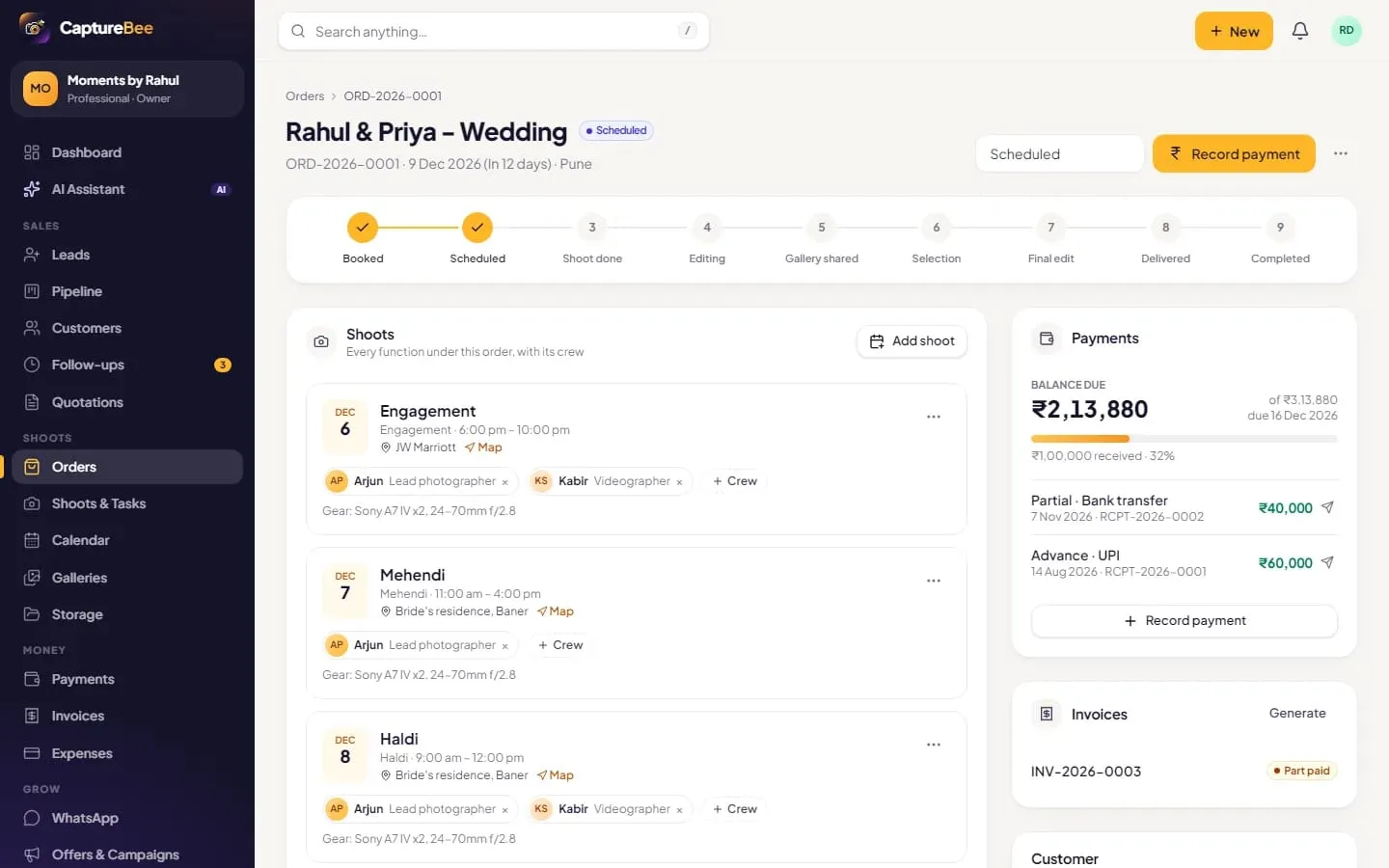
In CaptureBee, each function is its own shoot inside the wedding order — with date, time, venue, map link, gear list and crew roles — and you’re warned before you double-book someone on the same day.
Gear checklist for a wedding day
- Two bodies, plus a backup
- 24–70mm, 70–200mm and a fast prime for low light
- Flash with diffuser; spare batteries for everything
- Twice the memory cards you think you need — and a plan to back them up each night
- Rain covers for outdoor functions
After the wedding
The shot list doesn’t end at the reception. Clients judge you on how quickly and smoothly they get their photos — see the wedding photo delivery timeline and how online photo selection replaces endless WhatsApp forwards.
Frequently asked questions
How many photos are taken at an Indian wedding?
It varies widely with the number of functions, guests and photographers — often several thousand across all functions, from which a few hundred edited photos and an album selection are delivered.
Should the couple see the shot list?
Yes. Share it a week before and ask them to add family-specific rituals and must-have people. It prevents most post-wedding disappointments.
How do I avoid missing family group photos?
Make a group list in order, name a group caller from each family and schedule groups right after key rituals, when everyone is already there.
Plan every function in one place
CaptureBee keeps every function, crew member, gear list and payment of a wedding inside one order — and the client’s gallery, photo selection and final delivery in the same place. Start the 14-day free trial or read CaptureBee’s guide to planning multi-day wedding shoots.