Photography Business
How to Start a Photography Business in India: Registration, GST, Pricing and Tools
Great photos are only half a photography business. Here’s the other half — registration, GST, pricing, first clients and the systems that keep it running.
By 7CRM Team10 min read
Plenty of talented photographers struggle to make a living, while others with similar skills run busy, profitable studios. The difference is usually not the camera — it’s the business: a clear niche, sensible pricing, proper paperwork and systems that stop enquiries and payments from slipping through.
Here is a step-by-step guide to starting a photography business in India.
Registration and tax rules change and depend on your situation — confirm the details with a chartered accountant (CA) before you file anything.
Step 1: Choose your niche
“I shoot everything” is hard to market. Pick one or two niches to start:
| Niche | Typical season | What clients care about |
|---|---|---|
| Weddings | Wedding season, multi-day events | Reliability, candid style, crew size, album |
| Pre-wedding | Months before weddings | Creativity, locations, short reels |
| Baby & maternity | Year-round | Safety, patience, props, studio comfort |
| Events & corporate | Year-round | Punctuality, quick delivery, invoices with GST |
| Products & e-commerce | Year-round | Consistency, white backgrounds, turnaround |
Your niche decides your equipment, your portfolio and your pricing. Baby photography, for example, needs a safe studio setup — see our baby shoot props safety checklist.
Step 2: Register the business
Most photographers start as a sole proprietorship — the simplest structure. As you grow or take partners, a partnership or LLP may suit better; ask a CA.
Common first steps:
- A business bank account, so business money stays separate from personal money.
- Udyam registration (the government’s free online MSME registration), which records your business as a micro or small enterprise.
- Shop and Establishment registration if you open a studio — rules vary by state and city.
Step 3: Understand GST basics
- Service businesses generally need to register for GST once their annual turnover crosses the threshold — ₹20 lakh for most states (lower in some special-category states).
- You can register voluntarily before that; some corporate clients prefer suppliers with a GSTIN.
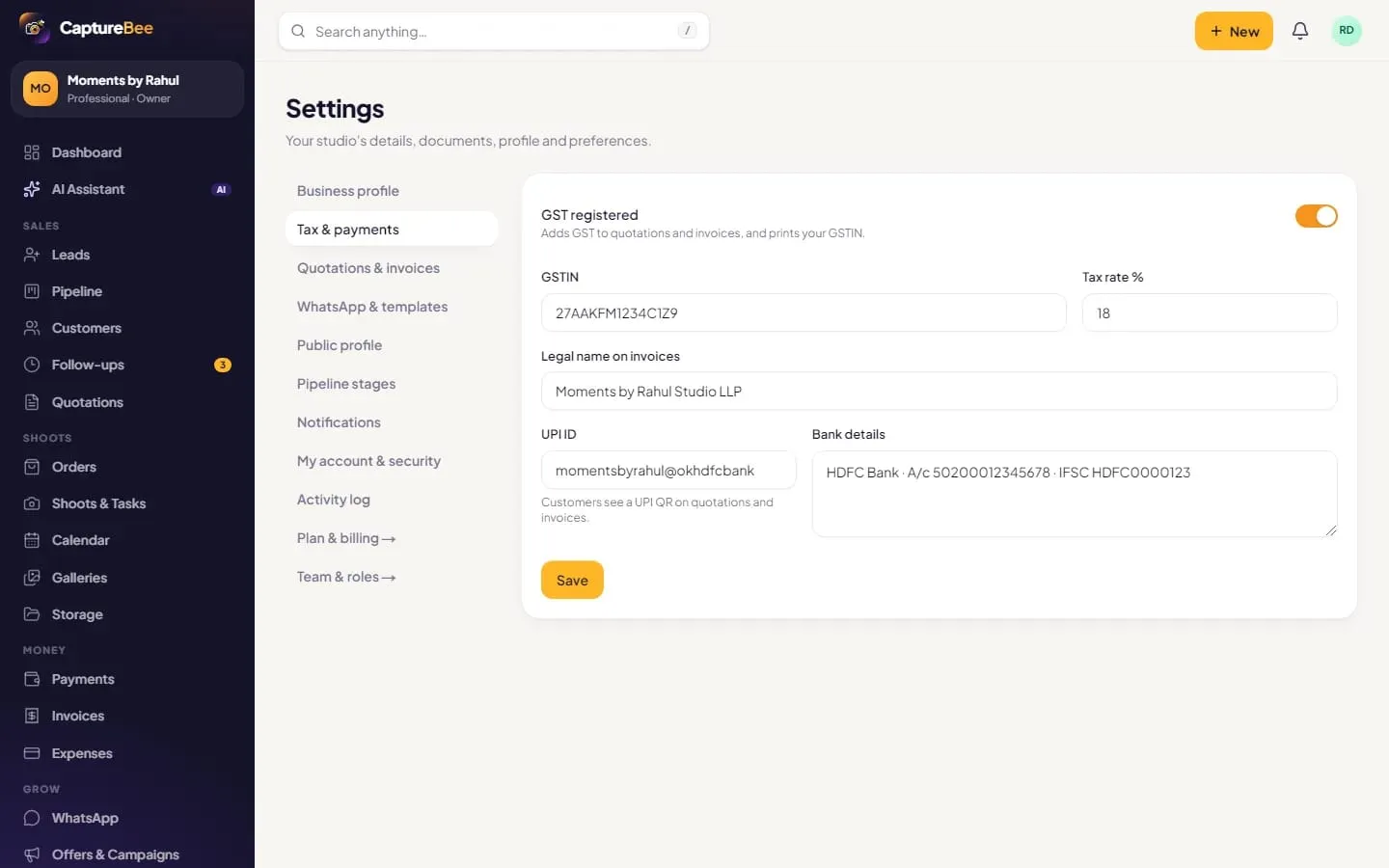
- Photography services are generally taxed at 18% GST. Your CA will confirm the right classification and rate for your work.
Once registered, your quotations and invoices need your GSTIN and the tax line. Tools such as CaptureBee print your GSTIN and GST on quotations and invoices automatically once you turn it on.
Step 4: Price with packages, not hourly guesses
Work out your costs first — equipment, editing time, assistants, travel, album printing, software, marketing — then build packages clients can compare easily:
| Package | Example contents |
|---|---|
| Essential | One function, one photographer, edited photos online |
| Classic | Two functions, photo + video, 30-sheet album |
| Premium | All functions, two photographers + video, drone, 40-sheet album |
Packages make quotations faster and comparisons easier. Our guide to photo studio budgeting and pricing for profitability goes deeper.
Step 5: Buy the right equipment — not all of it
Start with what your niche truly needs: two camera bodies (one as backup), two or three versatile lenses, a flash, plenty of memory cards and batteries, and a reliable backup routine. Rent specialist gear (drones, long lenses) until you use it often. Opening a studio? Use our photo studio setup checklist.
Step 6: Write booking terms before your first booking
Advance, payment schedule, cancellation, delivery timeline, photo selection and copyright — write them once and put them on every quotation. See photography booking terms and conditions.
Step 7: Get your first clients
- Portfolio: 20–30 of your best images in your niche, not everything you’ve shot.
- Instagram and WhatsApp: where most Indian clients discover and contact photographers.
- A public profile page with your packages and reviews, so enquiries arrive with context.
- Referrals and reviews: ask every happy client — right after delivery is the best moment.
- Partnerships: wedding planners, decorators, makeup artists and venues.
More ideas in marketing and technology strategies to grow a photo studio.
Step 8: Set up systems from day one
The problems that sink new photography businesses are rarely about photos:
| Problem | System that fixes it |
|---|---|
| Enquiries lost in WhatsApp | A lead list with follow-up dates |
| Slow, inconsistent quotes | Packages and quotations clients accept online |
| “Did they pay the balance?” | Payments tracked against every booking |
| Double-booked dates | A shoot calendar with crew |
| Endless selection messages | Online galleries with a selection limit |
| No idea if you’re profitable | Revenue and expenses by month |
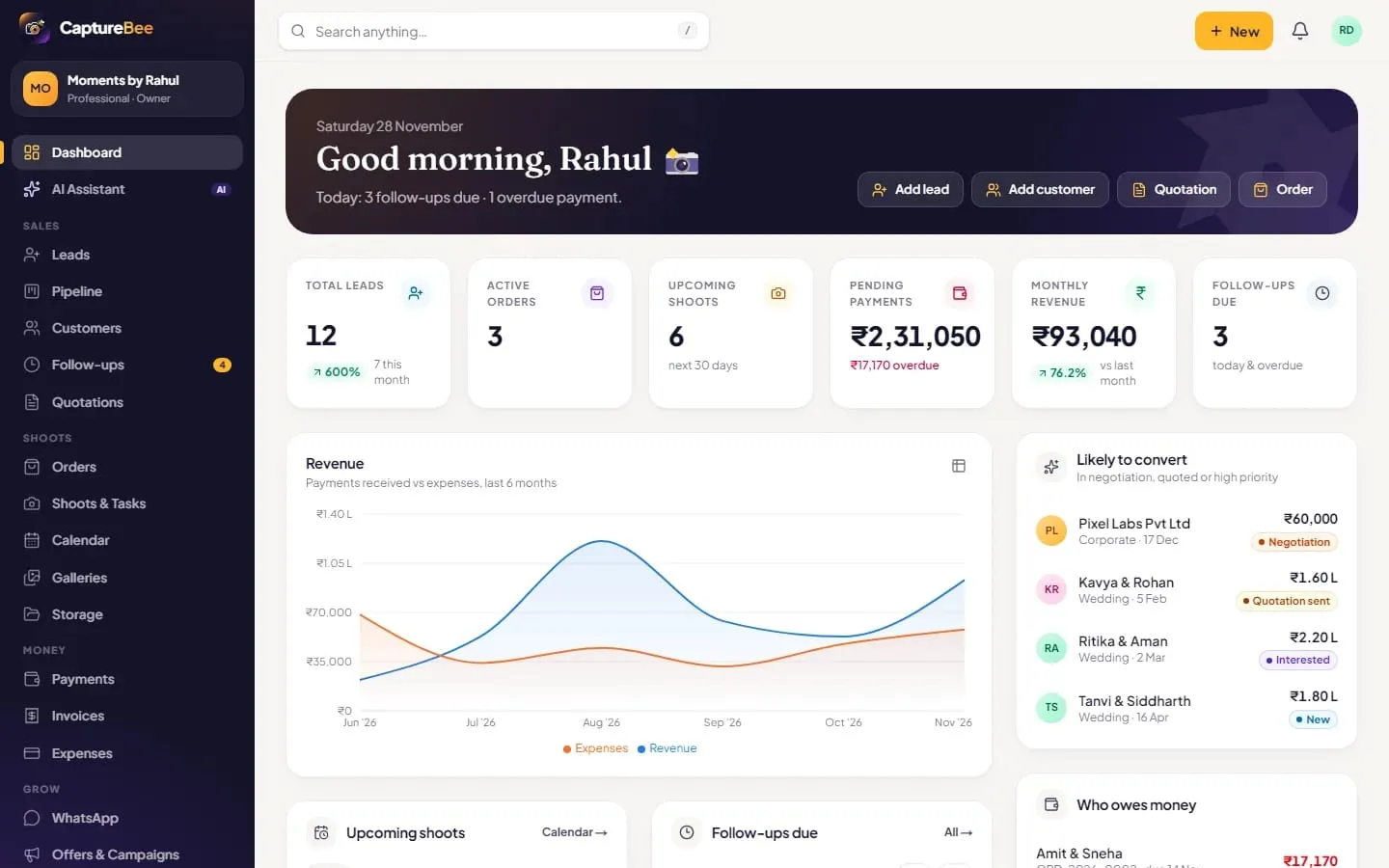
CaptureBee puts all of these in one app built for Indian photographers — leads and follow-ups, quotations, payments and GST invoices, shoot planning, client galleries and analytics.
Step 9: Track your numbers monthly
Each month, check revenue, expenses, profit, how many enquiries became bookings, and which lead sources actually book. It tells you where to spend on marketing and when to raise prices.
Frequently asked questions
Do I need GST registration to start a photography business?
Generally only once your turnover crosses the GST threshold, though you can register voluntarily earlier. Confirm with a CA, as rules depend on your situation and state.
How much does it cost to start a photography business in India?
It depends on your niche and whether you open a studio. Many photographers start home-based with essential gear and rent specialist equipment, then invest as bookings grow.
What software does a photography business need?
At minimum: a way to track enquiries and follow-ups, send quotations, record payments and deliver photos. An all-in-one tool such as CaptureBee replaces separate spreadsheets, Drive folders and notes.
Start with the right systems
CaptureBee helps new and growing photography businesses run leads, quotations, payments, shoots, galleries and delivery from one place. Start the 14-day free trial or read CaptureBee’s complete photography CRM guide.